
Sony Patents Deformable Controller, Promising New Gaming Immersion
The Japanese company has unveiled a prototype controller that allows users to squeeze, twist, and physically modify its buttons. This innovation aims for an unprecedented tactile experience in gaming.


Sony has unveiled a prototype gaming controller featuring deformable controls. This innovation, detailed in a patent filed in 2022 and published in late March, promises to revolutionize tactile interaction in gaming. Users will be able to squeeze, twist, and physically modify the buttons, immersing themselves in an unprecedented gaming experience. This advancement aims to strengthen the connection between on-screen actions and the sensations felt in players' hands.
Sony's central proposal focuses on a "manipulation device capable of transmitting tactile sensations similar to pressure." The controller integrates buttons, directional keys, and a control stick. All these elements are designed to deform or respond to the force applied by the user. Each physical action will have an immediate and recognizable consequence within the game.

The prototype incorporates an internal grid structure. This structure is formed by multiple linkage axes and nodal mechanisms. These components allow the controls to bend, stretch, sink, and twist in various ways. A layer of flexible, fabric-like material covers the entire matrix. This facilitates manipulation and offers a unique tactile sensation.
The patent describes a controller "of a size such that its opposite ends can be held by the user with both hands." This suggests an ergonomic design adaptable to different play styles. Additionally, a fabric cover that could envelop the entire device is contemplated. This cover would enhance comfort and the feeling of direct interaction with the virtual object.
This design moves away from traditional controllers. Traditional controllers limit physical interaction to pressing buttons or moving sticks. Sony proposes a system where the player can press, twist, lift, and contract different parts of the controller. This introduces new layers of immersion. It allows for richer communication between the person and the video game.
Sony's innovation is not limited to the mechanics of the controls alone. The controller is designed to emit signals to a console or computer. These signals depend on the modifications the player makes to it. Every gesture, pressure, twist, or stretch translates into a specific action within the digital environment. This adapts to game needs and developers' creativity.
Internal sensors detect changes in the controller's shape. They then transmit precise information to the corresponding computer equipment. In this way, the controller can simulate sensations like force, weight, impact, or vibrations. This leads players to perceive the game in a much more realistic and immersive way.
Keep reading online — scan the code
https://go.tricuatro.com/cNJnr
© tricuatro.com
Article topics
Related articles

MIT Chip Converts Invisible Infrared Light into Crucial Data
MIT researchers developed an innovative chip detecting methane and propane using mid-infrared light, with potential for millions of pixels and optical computing.

Assassin's Creed Black Flag Resynced Smashes 3 Million Sales, New Game Plus Announced
Ubisoft's successful re-release of the pirate classic continues to break records, confirming one of the most requested features from the gaming community.
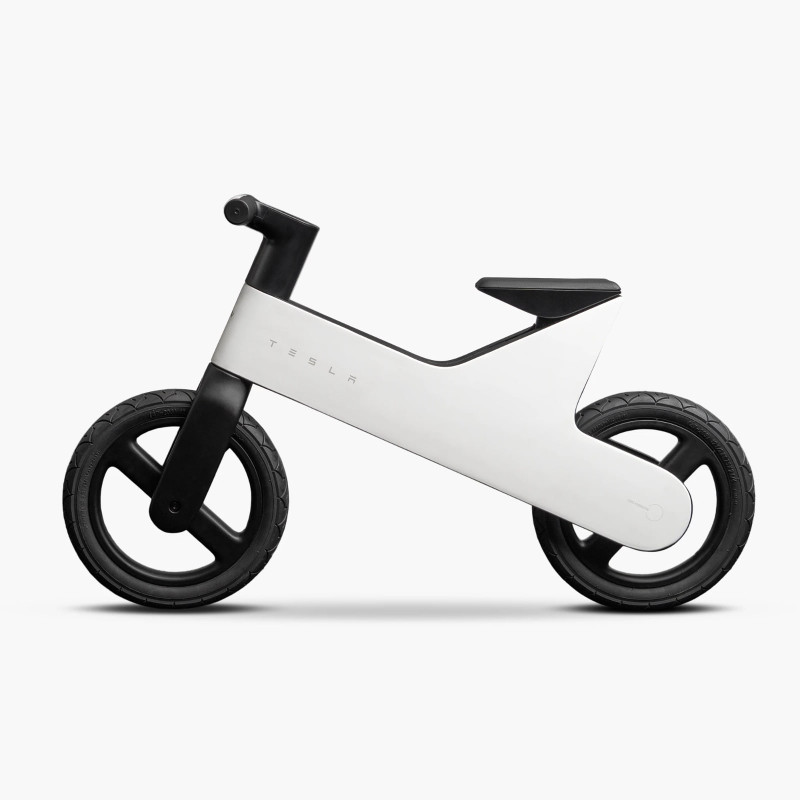
Tesla Launches Electric Cybertruck Replica for Kids in the US
Tesla introduces its scaled-down Cybertruck for children aged 6 to 12, an electric vehicle priced at USD 1,500, currently exclusive to the US market.
Latest news
View all
Sweet Interstellar Discovery: Erythrulose Detected in the Milky Way
Scientists from the Spanish Astrobiology Center have for the first time identified a true sugar, erythrulose, in a gas and dust cloud near our galaxy's center. This finding suggests complex molecules can form before stars and planets are born.

Paramount and Warner Bros. Merger Halted by Judge Over Antitrust Concerns
A coalition of 12 states successfully petitioned Judge Araceli Martinez-Olguin to temporarily block the deal, citing fears of higher prices and reduced content.

TikTok tests AI tool to protect creators from deepfakes
The video platform is rolling out an opt-in feature allowing users to verify their identity and report unauthorized AI-generated likenesses.
Comments (0)
No comments yet. Be the first!
Only registered readers can comment.