
Adaptive Intelligence: AI Robots Leap to Unseen Tasks with New Model
U.S. startup Physical Intelligence introduced π0.7, an AI model enabling robots to perform tasks without prior training. This breakthrough moves us closer to general-purpose robotic brains.

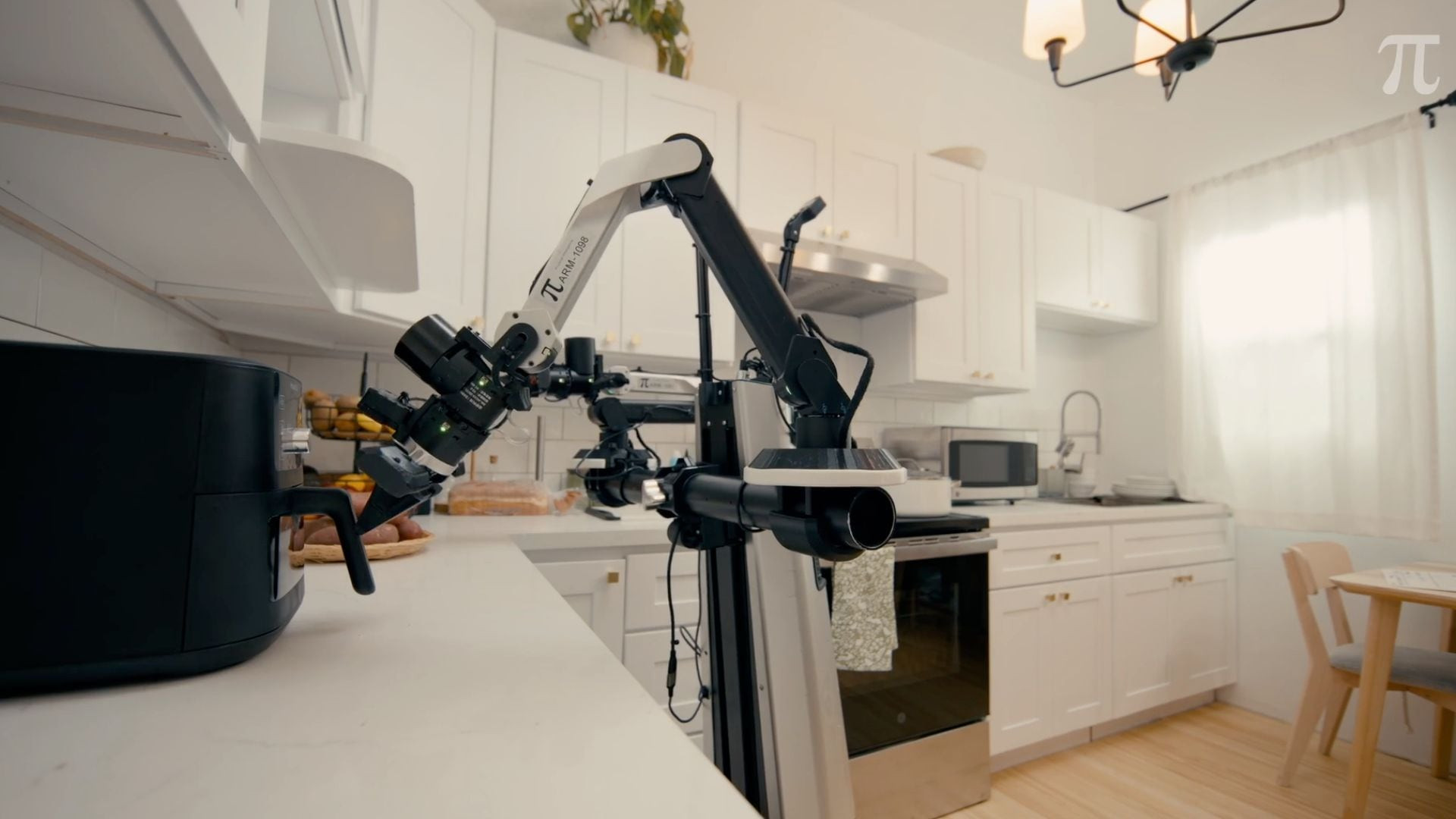
The field of robotics powered by artificial intelligence has made a significant leap forward. U.S. startup Physical Intelligence recently unveiled π0.7, an AI model capable of guiding robots to perform tasks they were never specifically trained for. This breakthrough marks a crucial step towards general-purpose robotic brains, enabling machines to adapt to simple instructions and solve novel problems in real time. Adaptive intelligence is emerging as the next frontier!
π0.7 represents a remarkable evolution from traditional systems. These older systems required specific training for each task, using independent datasets and models. The new system, by contrast, handles unknown tasks by combining and recombining skills learned in different contexts. Researchers call this "compositional generalization," a key capability for flexibility.
Experiments showcased the power of π0.7. Robots successfully manipulated previously unseen appliances. They also folded clothes without prior access to specific data about that activity. These results suggest a fundamental ability: transferring knowledge across different domains. This overcomes the rigidity of previous approaches in robotics.
The primary advancement lies in π0.7's ability to apply acquired knowledge in entirely new circumstances. It requires no additional adjustments or extensive retraining. Unlike prior systems, which struggled to combine vision, language, and action, this model generalizes across different types of robots, environments, and tasks.
This transition aims at creating general-purpose AI systems. They will be flexible and scalable, adapting their performance to environmental demands and received instructions. The model allows robots not only to solve concrete problems. It also enables them to face dynamic scenarios where they must improvise solutions from novel combinations of skills.
π0.7's adaptive capability stems from an innovative training strategy. It integrates multiple data sources for robust learning:
- Diverse robotic platforms.
- Human demonstrations.
- Autonomously generated episodes.
Instead of being limited to repetitive data, the model incorporates multimodal prompts. These detail both the objective and the method to achieve it. They include text instructions, visual sub-goals (like object arrangement), and task parameters. This combination of context and flexibility allows the system to interpret and execute complex tasks. It's a giant leap for robotic autonomy!
Keep reading online — scan the code
https://go.tricuatro.com/9eOyH
© tricuatro.com
Article topics
Related articles

TikTok tests AI tool to protect creators from deepfakes
The video platform is rolling out an opt-in feature allowing users to verify their identity and report unauthorized AI-generated likenesses.

Apple Sues OpenAI Over Alleged Hardware Trade Secret Theft
The Cupertino giant accuses former key employees, including Tang Tan, of stealing confidential hardware information for OpenAI's benefit and its expansion into consumer hardware.

Anthropic Tackles AI's Toughest Questions for a Responsible Future
The company launches an initiative to understand public concerns and transparently address the challenges of artificial intelligence development.
Latest news
View all
Sweet Interstellar Discovery: Erythrulose Detected in the Milky Way
Scientists from the Spanish Astrobiology Center have for the first time identified a true sugar, erythrulose, in a gas and dust cloud near our galaxy's center. This finding suggests complex molecules can form before stars and planets are born.

Paramount and Warner Bros. Merger Halted by Judge Over Antitrust Concerns
A coalition of 12 states successfully petitioned Judge Araceli Martinez-Olguin to temporarily block the deal, citing fears of higher prices and reduced content.

MIT Chip Converts Invisible Infrared Light into Crucial Data
MIT researchers developed an innovative chip detecting methane and propane using mid-infrared light, with potential for millions of pixels and optical computing.
Comments (0)
No comments yet. Be the first!
Only registered readers can comment.