
AI Learns to Say 'I Don't Know' to Reduce Fabricated Responses
A new method inspired by the human brain aims to make artificial intelligence models admit their uncertainty, reducing invented answers and improving reliability.

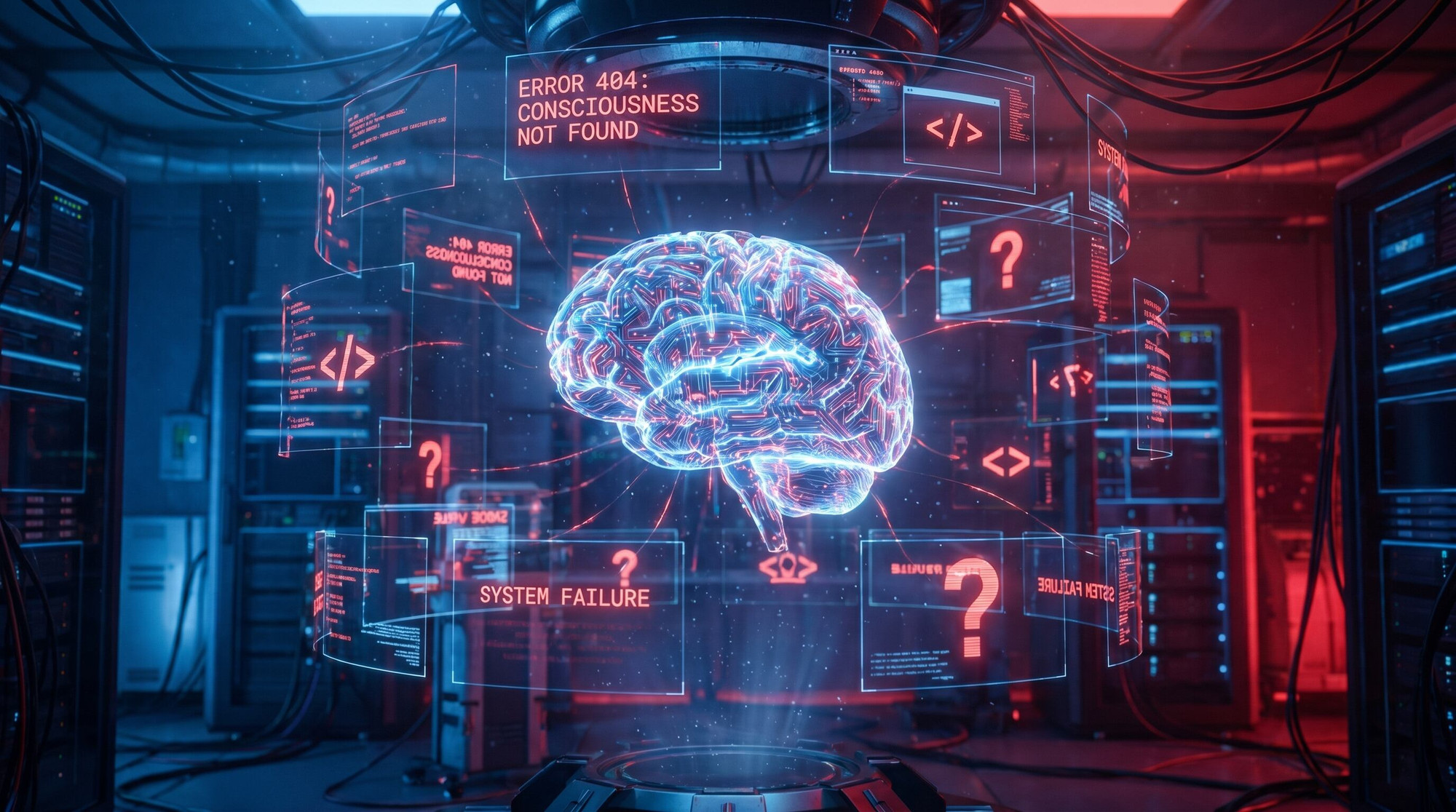
Artificial intelligence (AI) has demonstrated an astonishing ability to generate responses and perform complex tasks, but a persistent challenge is its tendency to fabricate information when it doesn't know the answer. Researchers at KAIST have developed an innovative technique to address this issue, aiming to make AI capable of recognizing and communicating its own uncertainty.
The problem arises, according to the researchers, because AI systems learn patterns during training without developing a real understanding of their knowledge limits. This leads them to generate answers with a high degree of confidence even when they don't know something, a phenomenon known as 'hallucination'. The study's authors emphasize the need for AI to be able to say 'I'm not sure' on its own.
During the initial stages of deep learning, a key method for training neural networks, models begin to establish connections without discerning between correct and incorrect information. This 'random initialization' can cause AI to develop overconfidence in erroneous answers, a trend that persists as training progresses.
“AI should be able to say ‘I’m not sure’ on its own,” explained the study’s authors.
To counteract this, the Korean team drew inspiration from the 'spontaneous neural activity' of the human brain. In our brains, neurons generate signals even without external stimuli, which is crucial for the early development of neural circuits. The researchers applied a similar concept by adding a phase prior to conventional AI training.
In this new stage, the AI model is exposed solely to random noise and seemingly nonsensical data. The premise is that, before learning real information, the artificial intelligence first 'learns' that it doesn't know anything yet. By experimenting with chaotic data and arbitrary outcomes, the system develops much lower confidence levels, close to random chance. This, according to the authors, improves the correlation between the model's actual accuracy and the confidence with which it presents its answers.
The applications of this research extend far beyond chatbots like ChatGPT or Google Gemini, which are often the focus of the hallucination debate. AI systems are used in autonomous vehicles, drones, industrial surveillance systems, and medical diagnostic support tools. In these fields, the ability to recognize uncertainty is as vital as the accuracy of the response.
This new technique also opens the door to developing metacognitive capabilities in AI, allowing the system to be aware of its own knowledge limitations. Professor Se-Bum Paik, the lead author of the study, highlighted that principles inspired by brain development can be fundamental to creating AI systems that reason more like humans.
The tech industry, including giants like Apple, Microsoft, Anthropic, and Google, has been working tirelessly to improve the accuracy and reliability of their AI models. However, a definitive solution for hallucinations remains a challenge. KAIST's proposal offers a promising approach, teaching AI not only to respond but also to identify when a response is not secure.
Keep reading online — scan the code
https://go.tricuatro.com/aJDeM
© tricuatro.com
Article topics
Related articles

TikTok tests AI tool to protect creators from deepfakes
The video platform is rolling out an opt-in feature allowing users to verify their identity and report unauthorized AI-generated likenesses.
Apple Sues OpenAI Over Alleged Hardware Trade Secret Theft
The Cupertino giant accuses former key employees, including Tang Tan, of stealing confidential hardware information for OpenAI's benefit and its expansion into consumer hardware.

Anthropic Tackles AI's Toughest Questions for a Responsible Future
The company launches an initiative to understand public concerns and transparently address the challenges of artificial intelligence development.
Latest news
View all
Sweet Interstellar Discovery: Erythrulose Detected in the Milky Way
Scientists from the Spanish Astrobiology Center have for the first time identified a true sugar, erythrulose, in a gas and dust cloud near our galaxy's center. This finding suggests complex molecules can form before stars and planets are born.

Paramount and Warner Bros. Merger Halted by Judge Over Antitrust Concerns
A coalition of 12 states successfully petitioned Judge Araceli Martinez-Olguin to temporarily block the deal, citing fears of higher prices and reduced content.

MIT Chip Converts Invisible Infrared Light into Crucial Data
MIT researchers developed an innovative chip detecting methane and propane using mid-infrared light, with potential for millions of pixels and optical computing.
Comments (0)
No comments yet. Be the first!
Only registered readers can comment.