
AI Reveals Vowel-Like Patterns in Sperm Whales' Complex "Language"
A surprising discovery, powered by artificial intelligence, transforms our understanding of these cetaceans' communication. Acoustic patterns analogous to human vowels were identified.

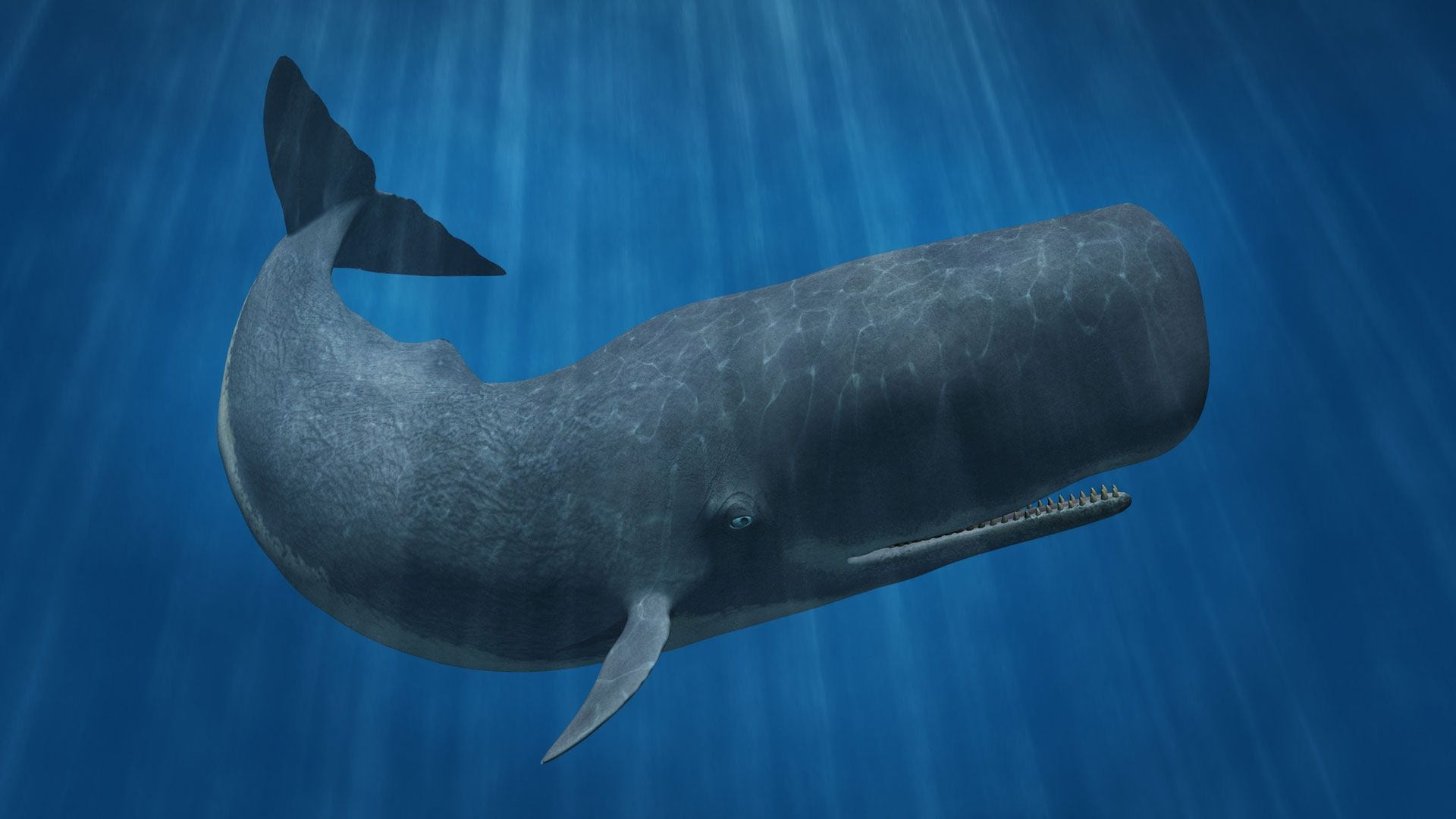
A recent discovery about sperm whale communication has transformed our understanding of their language. Scientists in the Caribbean, as detailed by National Geographic, identified acoustic patterns analogous to human vowels. This finding, made possible by artificial intelligence, suggests an unexpected phonetic complexity within their communication system.
The research is based on the analysis of over 8,700 "codas." These are sequences of clicks sperm whales use for communication. They modulate duration, frequency, and rhythm, forming systematic acoustic combinations. These combinations resemble the articulation of vowels in human speech.
The decoding of this sophisticated language was made possible by Project CETI (Cetacean Translation Initiative). This international initiative gathered a database of over 8,700 "codas" recorded in the Caribbean. To analyze this volume of information, the team turned to artificial intelligence.
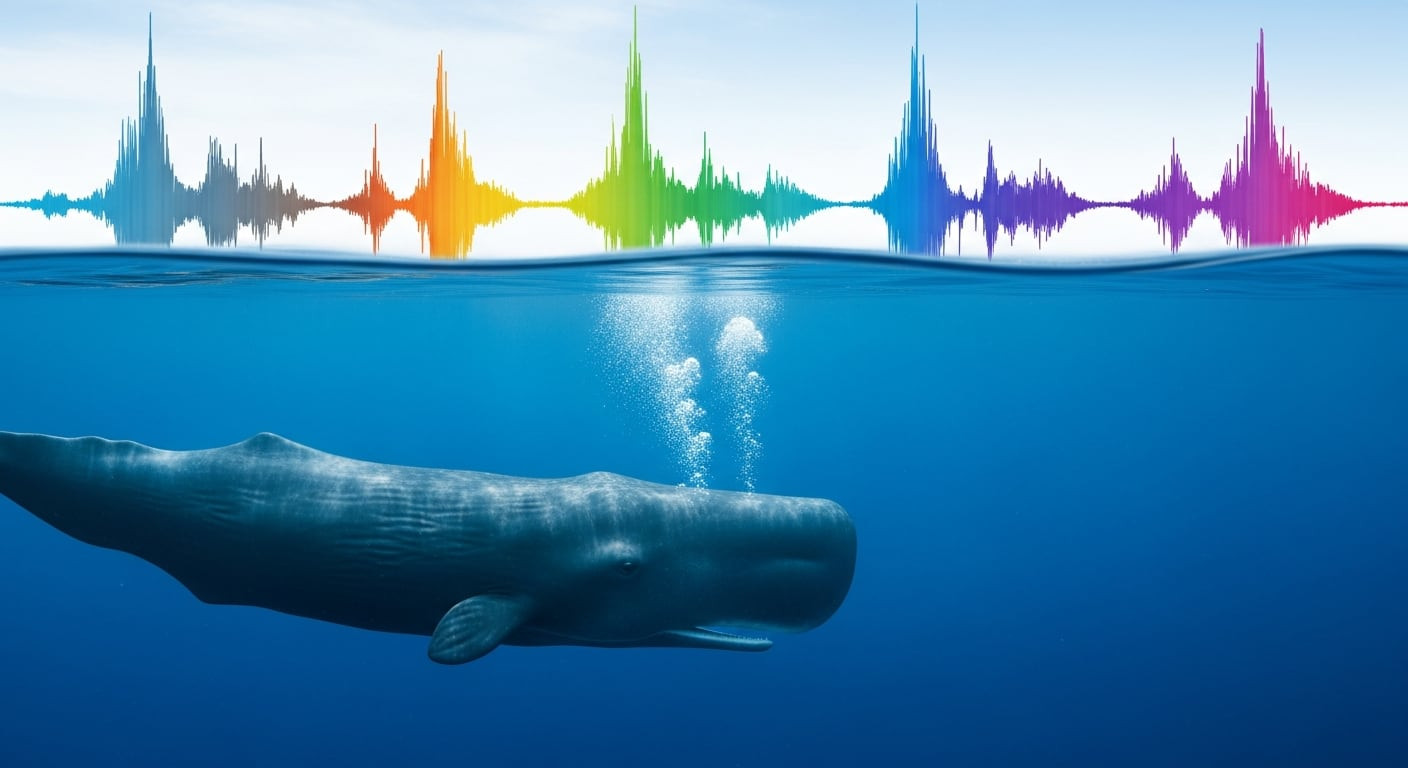
The algorithms successfully identified minimal acoustic differences. They isolated the basic units of sperm whale "phonetics." This had not been possible with conventional methods until now. The use of AI allowed detecting patterns and classifying specific click combinations. This opens the possibility of interpreting the structural rules of their communication.
The study reveals parallels between sperm whale communication and human language. Both systems organize communication into acoustic units with functions similar to vowels. In humans, vowels modify the meaning of words. In sperm whales, variations in clicks fulfill an analogous function. They modulate the transmitted information.
The team observed that sperm whales do not just string "codas" together, but also apply systematic variations. This suggests a degree of complexity and flexibility comparable to human phonetics. This structural parallelism evidences an evolutionary convergence in the organization of advanced communication systems.
The research identified four recurrent acoustic patterns. These are considered functional equivalents to human vowels. These patterns are distinguished by precise differences in duration and interval between clicks. Furthermore, sperm whales were shown to employ "coarticulation." This means they modify the sound of a click based on the preceding one. What an incredible insight into their world!
Keep reading online — scan the code
https://go.tricuatro.com/Xbea7
© tricuatro.com
Article topics
Related articles

Sweet Interstellar Discovery: Erythrulose Detected in the Milky Way
Scientists from the Spanish Astrobiology Center have for the first time identified a true sugar, erythrulose, in a gas and dust cloud near our galaxy's center. This finding suggests complex molecules can form before stars and planets are born.

SpaceX Scrubs Starship Test Flight in South Texas
Computer systems detected an anomaly during the Super Heavy booster's engine startup sequence, forcing the mission's abort.

JAXA's RV-X Reusable Rocket Successfully Completes First Flight
Japan's space agency JAXA successfully tested its RV-X prototype, a critical step towards reducing costs and boosting competitiveness in the global space market.
Latest news
View all
Paramount and Warner Bros. Merger Halted by Judge Over Antitrust Concerns
A coalition of 12 states successfully petitioned Judge Araceli Martinez-Olguin to temporarily block the deal, citing fears of higher prices and reduced content.

MIT Chip Converts Invisible Infrared Light into Crucial Data
MIT researchers developed an innovative chip detecting methane and propane using mid-infrared light, with potential for millions of pixels and optical computing.

Assassin's Creed Black Flag Resynced Smashes 3 Million Sales, New Game Plus Announced
Ubisoft's successful re-release of the pirate classic continues to break records, confirming one of the most requested features from the gaming community.
Comments (0)
No comments yet. Be the first!
Only registered readers can comment.