
AI uncovers new insights into human DNA structure and function
Researchers in the US found that DNA structures are more dynamic than previously thought, opening new avenues for disease treatment.

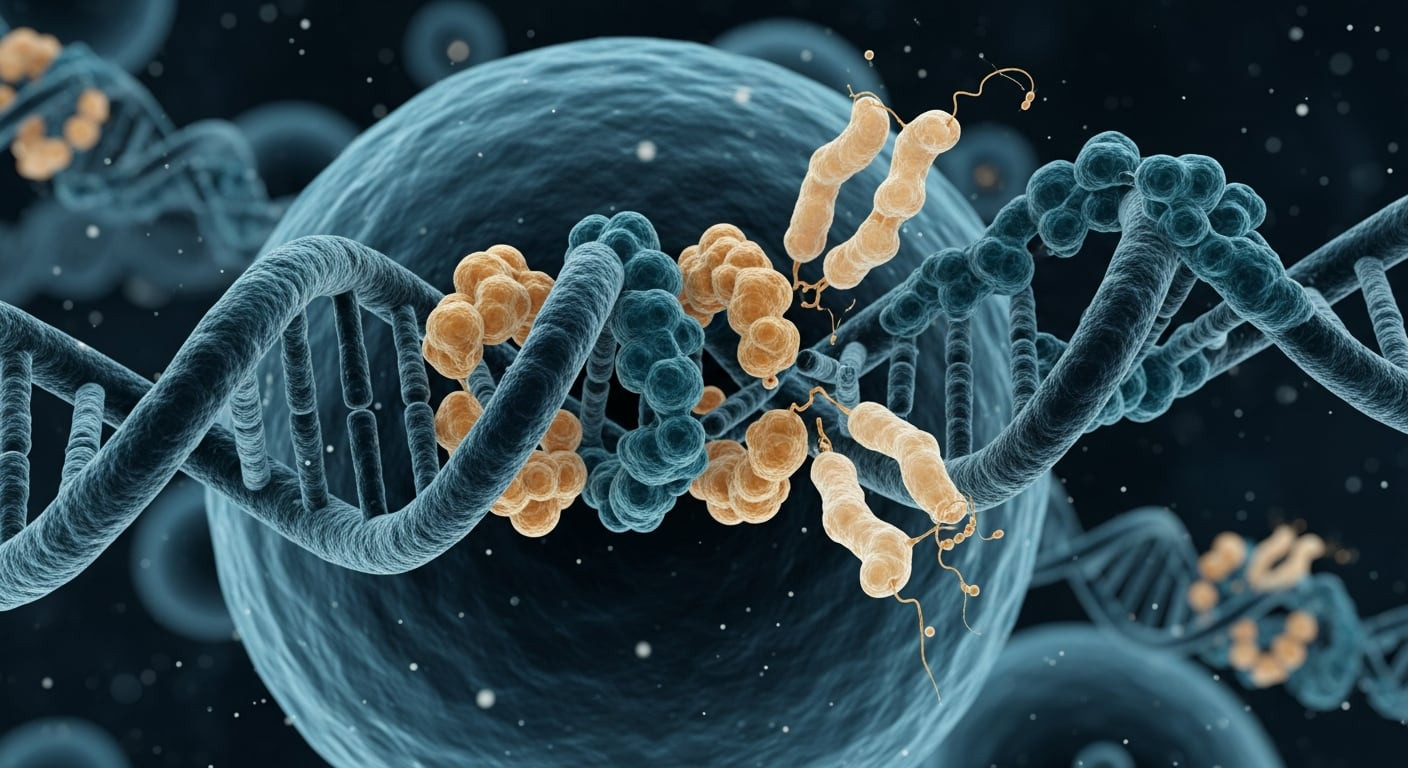
Each human cell compresses over 1.8 meters of DNA into an incredibly tiny space, similar to fitting a house into a sugar cube. To organize this, DNA wraps around proteins called nucleosomes. Researchers at the Gladstone and Arc Institutes in the US discovered that these structures are far more dynamic, which could impact how we approach complex diseases and aging.
For decades, the dominant view was that DNA was tightly coiled around nucleosomes, making it inaccessible. Only the unwrapped DNA was considered usable. But these new findings challenge that idea, showing that the genome's organization is more flexible and nuanced.
Vijay Ramani from Gladstone explained that we once thought genes were simply on or off. Now, it’s clearer that gene activity resembles a volume dial, revealing a new organizational code within the genome.
The team employed an AI tool called IDLI, built on a previous technology named SAMOSA. While SAMOSA maps nucleosome positions on individual DNA molecules, IDLI analyzes internal structures in two dimensions, providing deeper insights into their internal organization.
Each nucleosome consists of eight distinct blocks. IDLI detects whether these blocks are intact and properly connected. When blocks are missing or loose, the nucleosome becomes distorted, exposing parts of the DNA. In embryonic mouse cells, over 85% of nucleosomes showed some distortion, indicating that the genome is more accessible than previously believed.
Hani Goodarzi from the Arc Institute compared this to reading a text with only sounds and silences. Now, with these tools, we can see letters, words, and grammar rules that control gene regulation, opening new doors in genetics.
The researchers identified 14 structural states of nucleosomes, each linked to different levels of gene activity. These patterns were consistent in human cells transforming into liver cells and in mouse liver samples. Transcription factors, proteins that turn genes on or off, also influence nucleosome shape. Removing some of these factors changed the distortion patterns, demonstrating how internal structure regulates gene activity.
Keep reading online — scan the code
https://go.tricuatro.com/KPv6p
© tricuatro.com
Article topics
Related articles

Sweet Interstellar Discovery: Erythrulose Detected in the Milky Way
Scientists from the Spanish Astrobiology Center have for the first time identified a true sugar, erythrulose, in a gas and dust cloud near our galaxy's center. This finding suggests complex molecules can form before stars and planets are born.

SpaceX Scrubs Starship Test Flight in South Texas
Computer systems detected an anomaly during the Super Heavy booster's engine startup sequence, forcing the mission's abort.

JAXA's RV-X Reusable Rocket Successfully Completes First Flight
Japan's space agency JAXA successfully tested its RV-X prototype, a critical step towards reducing costs and boosting competitiveness in the global space market.
Latest news
View all
Paramount and Warner Bros. Merger Halted by Judge Over Antitrust Concerns
A coalition of 12 states successfully petitioned Judge Araceli Martinez-Olguin to temporarily block the deal, citing fears of higher prices and reduced content.

MIT Chip Converts Invisible Infrared Light into Crucial Data
MIT researchers developed an innovative chip detecting methane and propane using mid-infrared light, with potential for millions of pixels and optical computing.

Assassin's Creed Black Flag Resynced Smashes 3 Million Sales, New Game Plus Announced
Ubisoft's successful re-release of the pirate classic continues to break records, confirming one of the most requested features from the gaming community.
Comments (0)
No comments yet. Be the first!
Only registered readers can comment.