
How Long Until Humans Return to the Moon? NASA's Artemis Plan After Artemis II
Following the success of Artemis II, NASA has adjusted its timeline for human return to the Moon. Artemis III will focus on critical tests, postponing the crewed lunar landing to Artemis IV in 2028.


The recent success of the Artemis II mission has significantly revitalized public interest in space exploration, particularly in NASA's ambitious goal of returning humans to the lunar surface. This milestone, which saw astronauts orbit the Moon, has laid crucial groundwork for the subsequent phases of the Artemis program. However, the path to the first crewed lunar landing since 1972 has undergone significant timeline adjustments. Originally, Artemis III was anticipated to be the mission that would see astronauts walk on the Moon again, but plans have evolved, and that historic responsibility now falls to the Artemis IV mission, currently projected for 2028.
The Artemis Plan: A Constantly Evolving Timeline
NASA's initial blueprint for lunar return envisioned Artemis II carrying a crew into lunar orbit, an objective successfully achieved. Immediately following, Artemis III was slated to conduct the first crewed lunar landing in over half a century. Nevertheless, a series of complex factors have compelled the space agency to recalibrate its expectations. Among the primary reasons for this shift are delays in the development of the Human Landing System (HLS) by SpaceX, a critical component for lunar descent and ascent. These technical and logistical challenges have led to a restructuring of the program, prioritizing safety and thorough preparation over adherence to initial deadlines.
Challenges in Lander Development and the Entry of New Players
The selection of SpaceX as the primary developer of the lunar lander for Artemis III was a pivotal step in NASA's strategy. Elon Musk's company committed to adapting its Starship vehicle to function as a lunar HLS. While the project has shown progress since its award in 2021, its development has not kept pace with initial expectations, leading to significant delays. In response to this situation, in October 2025, NASA made the strategic decision to open the HLS contract to other companies, seeking to diversify its options and mitigate risks. This move brought Blue Origin, Jeff Bezos's aerospace firm, into the picture, leading a consortium to develop its own lander, the Blue Moon, offering a vital alternative for the program's future.
Artemis III: A Mission of Crucial Testing
With the revised timeline, Artemis III, now anticipated for 2027, will assume a different but equally crucial role. This mission will focus on a series of essential tests to ensure the safety and effectiveness of future lunar operations. Its primary objective will be to test the rendezvous and docking operations of the Orion spacecraft with the Human Landing Systems, whether from SpaceX or Blue Origin, in low Earth orbit. Furthermore, astronauts are expected to perform extravehicular activities (EVAs), commonly known as "spacewalks," to evaluate the performance of the new lunar suits. These suits, co-developed in collaboration with the fashion house Prada, represent a significant technological advancement, and their testing in a space environment is indispensable before an actual lunar landing.
Looking Ahead: Artemis IV and Remaining Challenges
If all Artemis III tests proceed successfully and the lunar landers prove their reliability, the first crewed landing on the Moon since the Apollo 17 mission in 1972 could finally materialize with Artemis IV. This mission is currently targeted for 2028. However, it is crucial to acknowledge the inherent complexity of a program of this magnitude. The multitude of involved parties, from rocket and spacecraft development to life support systems and landing modules, introduces countless variables that can affect timelines. The Artemis II mission itself, originally expected in 2020, experienced multiple postponements over six years, a clear reminder of the challenges involved in space exploration. The greatest hurdle the Artemis program must overcome remains the availability of a robust and reliable Human Landing System, capable of safely transporting astronauts to the lunar surface and bringing them back.
Keep reading online — scan the code
https://go.tricuatro.com/DZmRT
© tricuatro.com
Article topics
Related articles

Sweet Interstellar Discovery: Erythrulose Detected in the Milky Way
Scientists from the Spanish Astrobiology Center have for the first time identified a true sugar, erythrulose, in a gas and dust cloud near our galaxy's center. This finding suggests complex molecules can form before stars and planets are born.
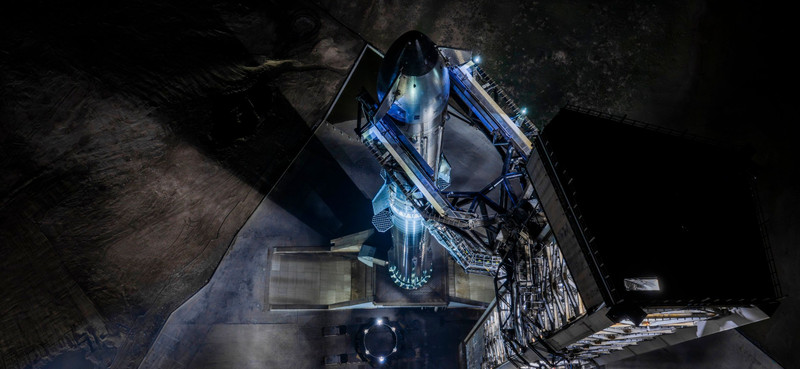
SpaceX Scrubs Starship Test Flight in South Texas
Computer systems detected an anomaly during the Super Heavy booster's engine startup sequence, forcing the mission's abort.
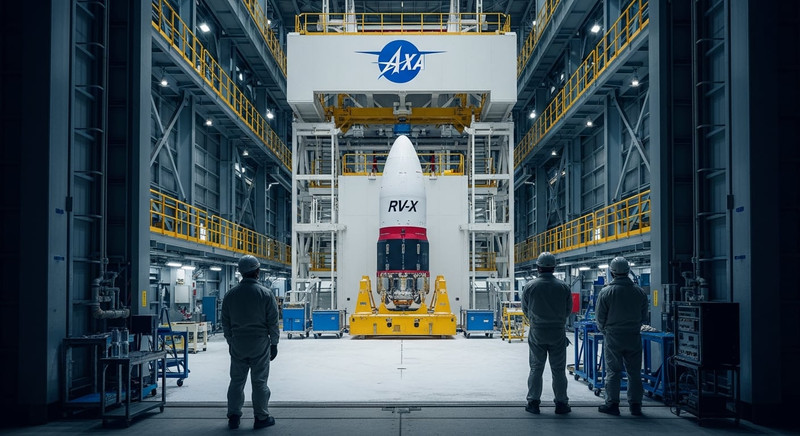
JAXA's RV-X Reusable Rocket Successfully Completes First Flight
Japan's space agency JAXA successfully tested its RV-X prototype, a critical step towards reducing costs and boosting competitiveness in the global space market.
Latest news
View all
Paramount and Warner Bros. Merger Halted by Judge Over Antitrust Concerns
A coalition of 12 states successfully petitioned Judge Araceli Martinez-Olguin to temporarily block the deal, citing fears of higher prices and reduced content.

MIT Chip Converts Invisible Infrared Light into Crucial Data
MIT researchers developed an innovative chip detecting methane and propane using mid-infrared light, with potential for millions of pixels and optical computing.

Assassin's Creed Black Flag Resynced Smashes 3 Million Sales, New Game Plus Announced
Ubisoft's successful re-release of the pirate classic continues to break records, confirming one of the most requested features from the gaming community.
Comments (0)
No comments yet. Be the first!
Only registered readers can comment.