
Jack Dorsey: AI Will Eliminate Middle Management and Reshape Business Structures
Jack Dorsey, co-founder of Twitter and CEO of Block, predicts that artificial intelligence is poised to eradicate middle management positions in companies, driving a radical transformation in organizational models.

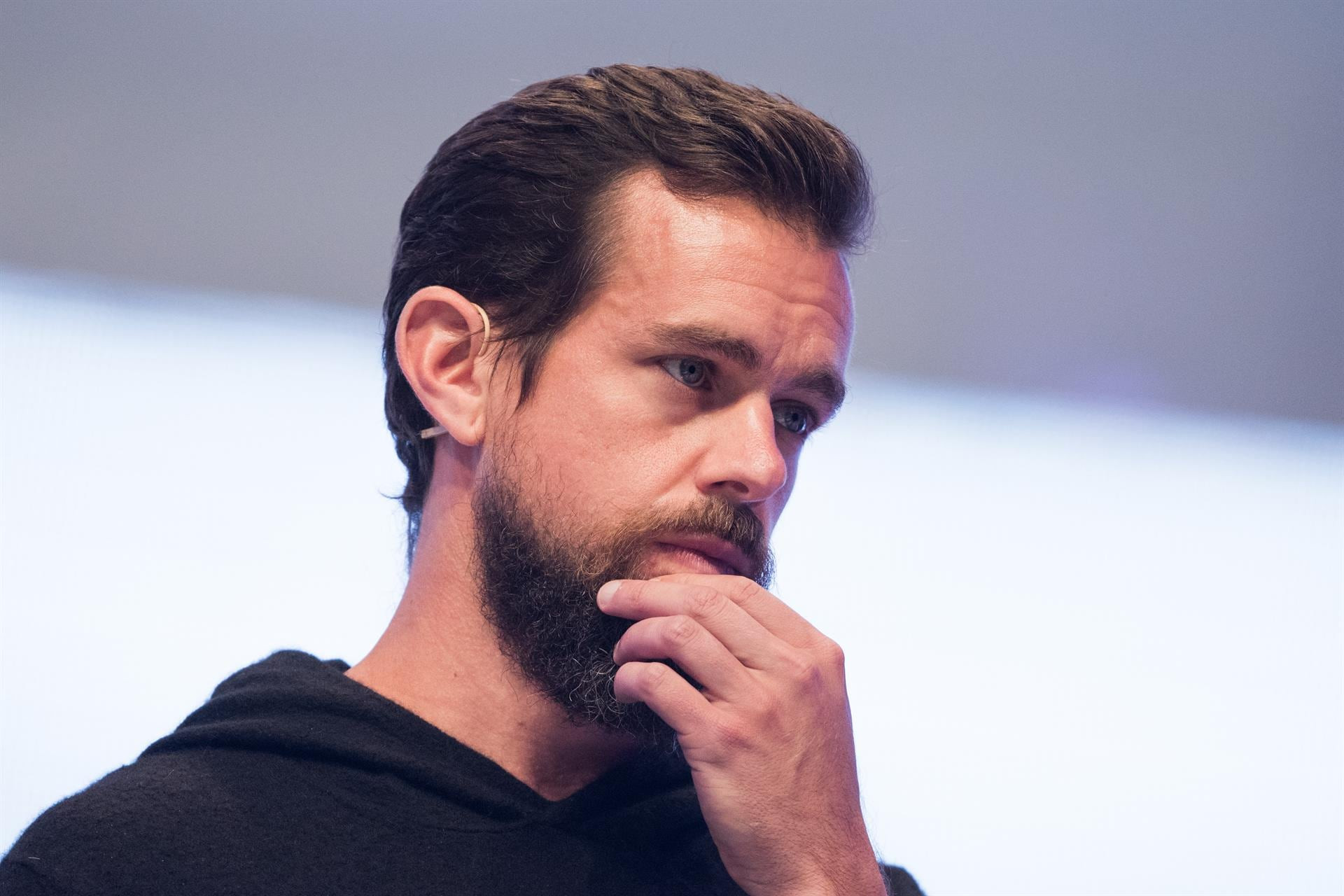
Artificial intelligence (AI) is not merely automating repetitive tasks; it is poised to fundamentally restructure corporate hierarchies. This is the warning from Jack Dorsey, co-founder of Twitter and current CEO of Block, who asserts that AI is capable of eliminating a significant portion of middle management roles within companies. This bold prediction, shared in a post on the Sequoia Capital blog, underscores a paradigm shift already unfolding in the business world, with profound implications for the workforce and organizational efficiency.
Dorsey, in collaboration with Roelof Botha, former managing partner at Sequoia, argues that the speed with which AI integrates into business processes has exceeded initial expectations. Unlike previous waves of automation, current AI possesses the ability to perform much of the work traditionally handled by middle managers. This includes crucial tasks such as gathering updates, transmitting instructions, coordinating projects, and keeping teams aligned. AI's capacity to process and synthesize information at an unparalleled scale and speed positions it as a tool capable of assuming these supervisory and coordination functions with unprecedented efficiency.
Block: A Laboratory for Organizational Transformation
Dorsey's vision is not merely theoretical; it is reflected in recent changes implemented at Block, his financial technology company. In February, Block announced the layoff of over 40% of its workforce, impacting more than 4,000 employees. This drastic decision was framed as part of a strategy to streamline operations through the adoption of artificial intelligence. The market's response was decisive: investors celebrated the move, causing the company's shares to surge by up to 24%. Furthermore, Block projects estimated revenues of $24 billion for 2025, an ambitious goal largely supported by the efficiency and optimization that AI can bring to its operations.
The Impact on Traditional Structures and the Workforce
Dorsey's warning takes on considerable magnitude when considering the volume of positions that could be affected. According to data from the U.S. Bureau of Labor Statistics, approximately 21 million Americans hold managerial positions, representing about 12% of the workforce. The joint analysis by Dorsey and Botha highlights that most companies operate under a pyramidal logic, where information flows from employees to managers and from executives to employees. In this model, middle managers act as essential nodes for communication and coordination, functions that AI can now replicate and optimize.
AI as a New Management Model
Dorsey and Botha compare modern companies to the Roman army, where hierarchy was fundamental for ordering and supervising large volumes of dispersed personnel. However, they point out a crucial difference: modern software is now capable of tracking projects, detecting problems, distributing tasks, and sharing information more quickly and accurately than humans. In business environments that prioritize remote work and the digitalization of processes, such as Block, AI can build a “global model” of the organization. This means maintaining an updated, real-time map of everything happening internally, from project progress to resource allocation and bottleneck identification.
This AI-driven efficiency logic also extends to customer interaction. Block, through its Square and Cash App platforms, processes millions of payments every day, granting it real-time insight into user needs and behaviors. Automation and data analysis via AI enable the company to make more informed and agile decisions, not only in internal management but also in adapting its services to market demands. Ultimately, Dorsey's vision suggests that AI is not just a tool for task automation, but a catalyst for a profound re-engineering of management and business structure, moving towards flatter, more agile, and data-driven models.
Keep reading online — scan the code
https://go.tricuatro.com/0ONJA
© tricuatro.com
Related articles

TikTok tests AI tool to protect creators from deepfakes
The video platform is rolling out an opt-in feature allowing users to verify their identity and report unauthorized AI-generated likenesses.

Apple Sues OpenAI Over Alleged Hardware Trade Secret Theft
The Cupertino giant accuses former key employees, including Tang Tan, of stealing confidential hardware information for OpenAI's benefit and its expansion into consumer hardware.

Anthropic Tackles AI's Toughest Questions for a Responsible Future
The company launches an initiative to understand public concerns and transparently address the challenges of artificial intelligence development.
Latest news
View all
Sweet Interstellar Discovery: Erythrulose Detected in the Milky Way
Scientists from the Spanish Astrobiology Center have for the first time identified a true sugar, erythrulose, in a gas and dust cloud near our galaxy's center. This finding suggests complex molecules can form before stars and planets are born.

Paramount and Warner Bros. Merger Halted by Judge Over Antitrust Concerns
A coalition of 12 states successfully petitioned Judge Araceli Martinez-Olguin to temporarily block the deal, citing fears of higher prices and reduced content.

MIT Chip Converts Invisible Infrared Light into Crucial Data
MIT researchers developed an innovative chip detecting methane and propane using mid-infrared light, with potential for millions of pixels and optical computing.
Comments (0)
No comments yet. Be the first!
Only registered readers can comment.