
James Webb Unravels 29 Cygni b's Origin: Planet or Failed Star?
A team of astronomers used the James Webb Space Telescope to resolve the paradox of 29 Cygni b, a massive object defying cosmic classifications.

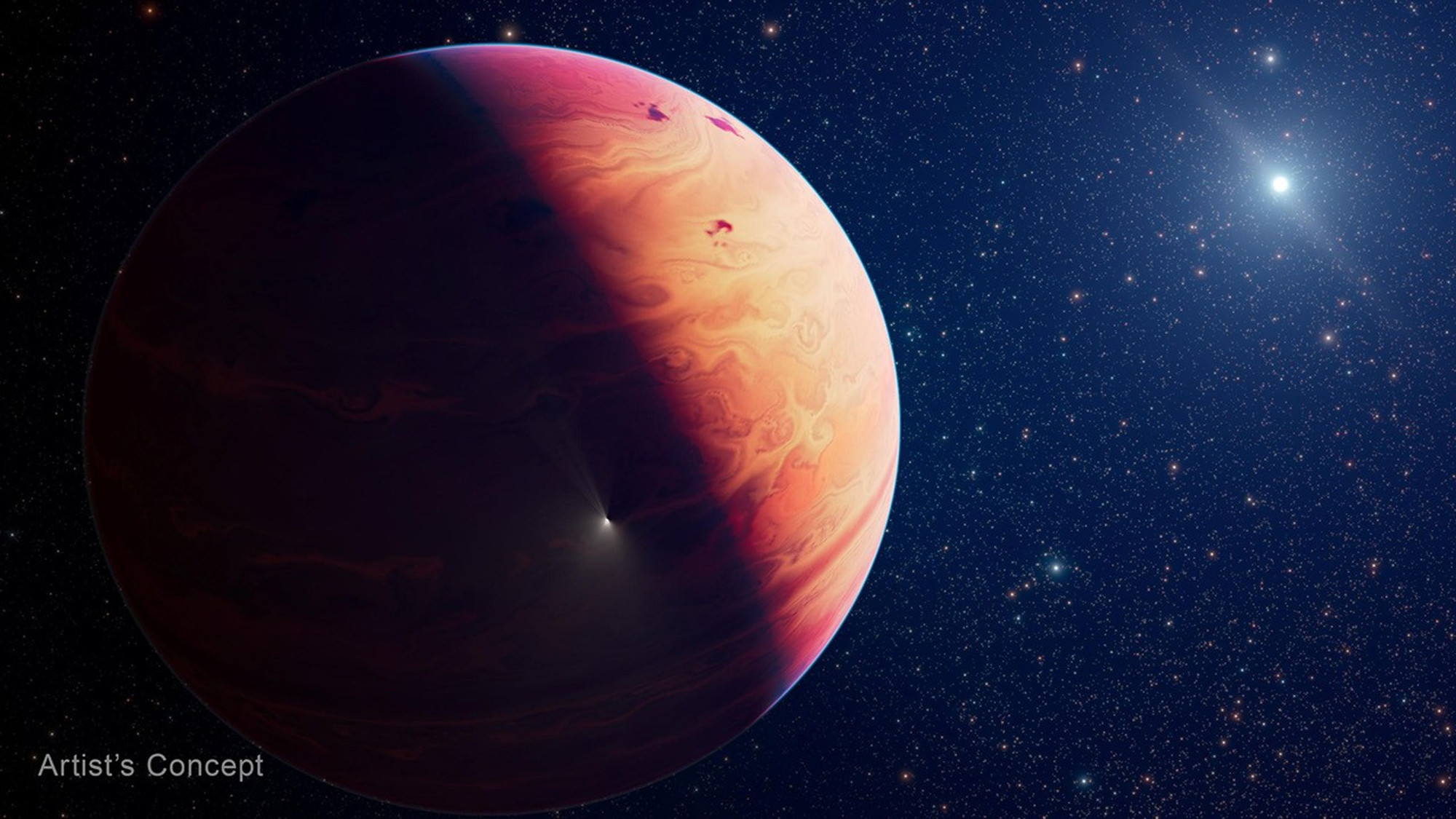
The James Webb Space Telescope (JWST) has unveiled the true nature of 29 Cygni b, a colossal celestial object that blurred the lines between planet and star. Its recent study refines our understanding of how cosmic bodies form.
With a mass fifteen times that of Jupiter, 29 Cygni b presented a cosmic paradox: was it a super-Jupiter or a brown dwarf, a failed star? Astronomers utilized the JWST's NIRCam instrument for high-resolution imaging and spectroscopic measurements.
NIRCam allows scientists to analyze the atmospheric composition of celestial bodies by observing how they reflect light. The data revealed that 29 Cygni b is remarkably enriched in metals, containing the equivalent of 150 Earths in heavy elements. What a groundbreaking discovery!
This abundance of metals provides a critical clue. It strongly suggests that 29 Cygni b formed through the accretion of a vast amount of metal-rich solids within a protoplanetary disk. Accretion is the process where matter gradually clumps together due to gravity. This confirms its planetary status, despite its unusual size.
Planetary formation typically follows a "bottom-up" process. Within a disk of gas and dust, known as a protoplanetary disk, particles collide and gradually clump together, growing into planets. Gas giants further accumulate gas during this accretion process.
In contrast, stars form "top-down." A massive cloud of gas fragments, and each fragment collapses under its own gravity, becoming denser and hotter. This immense gravitational collapse enables nuclear fusion in their cores.
The sheer mass of 29 Cygni b challenges the conventional "bottom-up" formation theory for such enormous objects. An alternative hypothesis suggests that extremely massive planets might form via direct fragmentation within protoplanetary disks.
The European Space Agency (ESA) explains this mechanism could account for very massive objects found billions of kilometers from their host stars. These distant regions would have less dense protoplanetary disks, favoring fragmentation. The cosmos always keeps us on our toes!
Keep reading online — scan the code
https://go.tricuatro.com/TpihG
© tricuatro.com
Article topics
Related articles
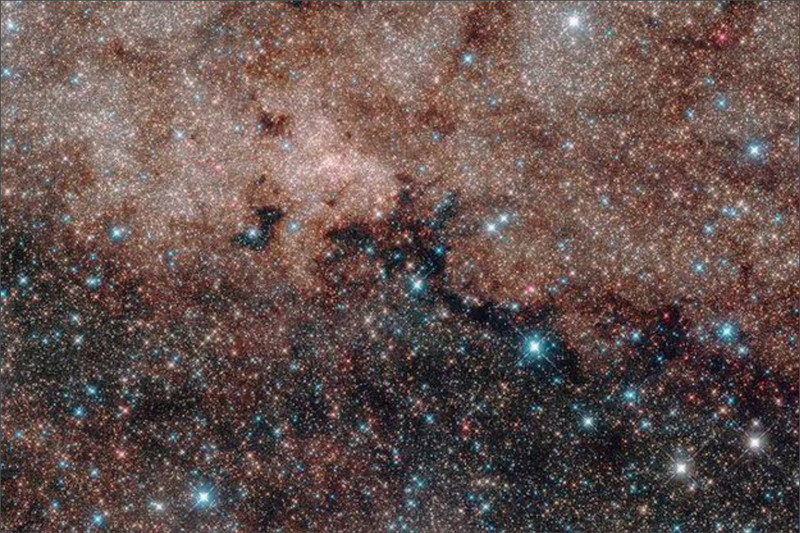
Sweet Interstellar Discovery: Erythrulose Detected in the Milky Way
Scientists from the Spanish Astrobiology Center have for the first time identified a true sugar, erythrulose, in a gas and dust cloud near our galaxy's center. This finding suggests complex molecules can form before stars and planets are born.
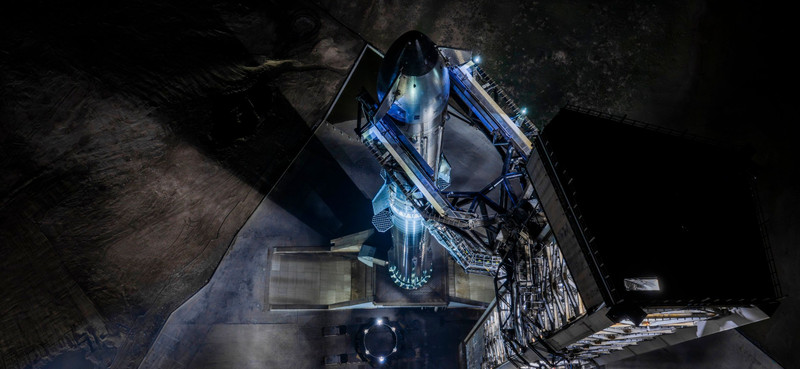
SpaceX Scrubs Starship Test Flight in South Texas
Computer systems detected an anomaly during the Super Heavy booster's engine startup sequence, forcing the mission's abort.

JAXA's RV-X Reusable Rocket Successfully Completes First Flight
Japan's space agency JAXA successfully tested its RV-X prototype, a critical step towards reducing costs and boosting competitiveness in the global space market.
Latest news
View all
Paramount and Warner Bros. Merger Halted by Judge Over Antitrust Concerns
A coalition of 12 states successfully petitioned Judge Araceli Martinez-Olguin to temporarily block the deal, citing fears of higher prices and reduced content.

MIT Chip Converts Invisible Infrared Light into Crucial Data
MIT researchers developed an innovative chip detecting methane and propane using mid-infrared light, with potential for millions of pixels and optical computing.

Assassin's Creed Black Flag Resynced Smashes 3 Million Sales, New Game Plus Announced
Ubisoft's successful re-release of the pirate classic continues to break records, confirming one of the most requested features from the gaming community.
Comments (0)
No comments yet. Be the first!
Only registered readers can comment.