
Japan Proposes Ambitious 11,000-Kilometer Solar Ring Around the Moon
Shimizu Corporation presents the "Luna Ring," a visionary project to harness uninterrupted solar energy from space and transmit it to Earth.


Japan is exploring an ambitious space-based solution to its energy challenges. Shimizu Corporation proposes the "Luna Ring," a massive 11,000-kilometer solar panel belt around the Moon's equator. This project aims to deliver clean, constant energy to Earth, addressing growing global demand and terrestrial solar power limitations. It represents a long-term engineering vision supported by the Japan Aerospace Exploration Agency (JAXA).
Japan heavily relies on primary energy imports, accounting for nearly 90% of its needs. Limited land and scarce natural resources make energy transition a critical survival issue. While exploring sources like wave power, Japan seeks more robust and consistent solutions. This drives the focus towards space, where solar radiation is uninterrupted and powerful.
The "Luna Ring" proposal is ingenious in its design. It envisions a continuous belt of photovoltaic cells installed along the Moon's equator. This strategic placement ensures that a portion of the structure always receives direct sunlight, guaranteeing 24/7 energy generation. The generated electricity would then convert into high-density microwaves and laser beams. These would be transmitted directly to receiving stations on Earth.
Global energy demand continues to rise steadily. Terrestrial solar power faces significant limitations, including the day-night cycle, cloud cover, and atmospheric interference. A lunar power plant eliminates these obstacles entirely: it offers continuous solar energy, free from atmospheric filtering or the risk of cloudy skies. This level of consistency is simply impossible to achieve on Earth. The European Space Agency (ESA) already acknowledges the strategic potential of space solar power through its Solaris program.
This project aligns with Japan's vision for a "Hydrogen Society." In this future, hydrogen would replace fossil fuels as the primary energy carrier. The concept of harnessing solar energy in space is not new; aerospace engineer Peter Glaser first proposed it in 1968. Since then, numerous governments and space agencies have investigated this possibility. Shimizu Corporation presents this not as a fixed project with a concrete date, but as a long-term engineering direction to guide its space energy research.
Keep reading online — scan the code
https://go.tricuatro.com/GF8vT
© tricuatro.com
Article topics
Related articles
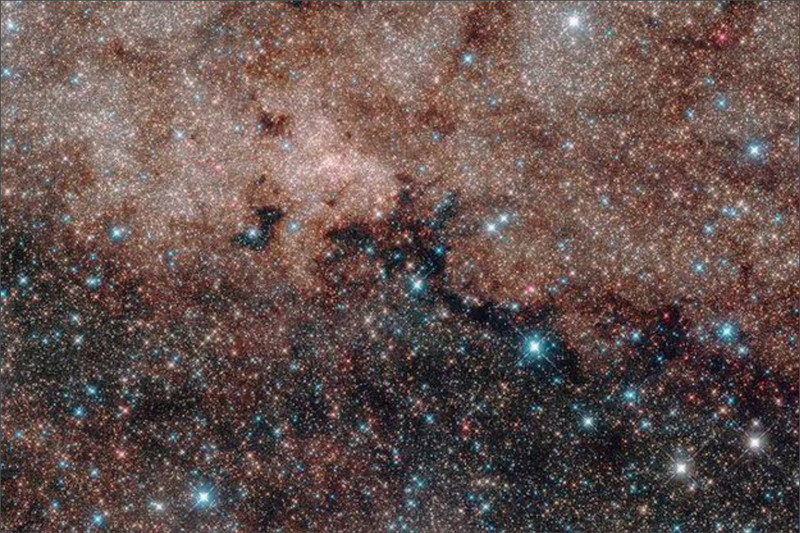
Sweet Interstellar Discovery: Erythrulose Detected in the Milky Way
Scientists from the Spanish Astrobiology Center have for the first time identified a true sugar, erythrulose, in a gas and dust cloud near our galaxy's center. This finding suggests complex molecules can form before stars and planets are born.
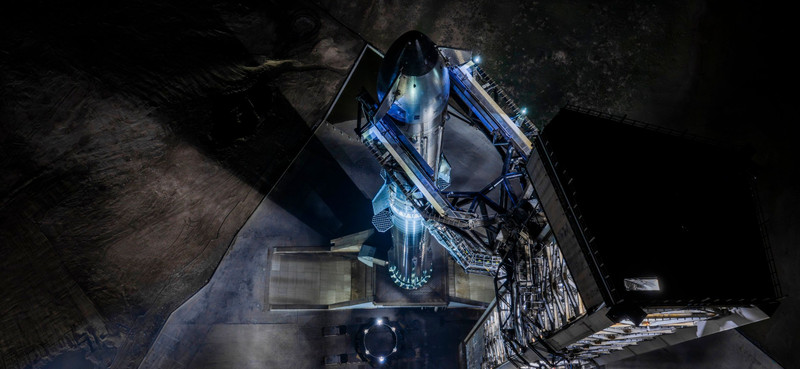
SpaceX Scrubs Starship Test Flight in South Texas
Computer systems detected an anomaly during the Super Heavy booster's engine startup sequence, forcing the mission's abort.

JAXA's RV-X Reusable Rocket Successfully Completes First Flight
Japan's space agency JAXA successfully tested its RV-X prototype, a critical step towards reducing costs and boosting competitiveness in the global space market.
Latest news
View all
Paramount and Warner Bros. Merger Halted by Judge Over Antitrust Concerns
A coalition of 12 states successfully petitioned Judge Araceli Martinez-Olguin to temporarily block the deal, citing fears of higher prices and reduced content.

MIT Chip Converts Invisible Infrared Light into Crucial Data
MIT researchers developed an innovative chip detecting methane and propane using mid-infrared light, with potential for millions of pixels and optical computing.

Assassin's Creed Black Flag Resynced Smashes 3 Million Sales, New Game Plus Announced
Ubisoft's successful re-release of the pirate classic continues to break records, confirming one of the most requested features from the gaming community.
Comments (0)
No comments yet. Be the first!
Only registered readers can comment.