
Meta Boosts Efficiency with Unified AI Agents for Hyperscale Optimization
Meta has launched an innovative program leveraging artificial intelligence to optimize its infrastructure at hyperscale, achieving significant energy savings and freeing up engineering time.


Meta introduced its Capacity Efficiency Program, a pivotal initiative employing an AI agent platform to automate the detection and resolution of performance issues across its vast infrastructure. This strategic move allows the company to save hundreds of megawatts of power. It also frees up engineers to focus on innovating new products, rather than addressing performance bottlenecks.
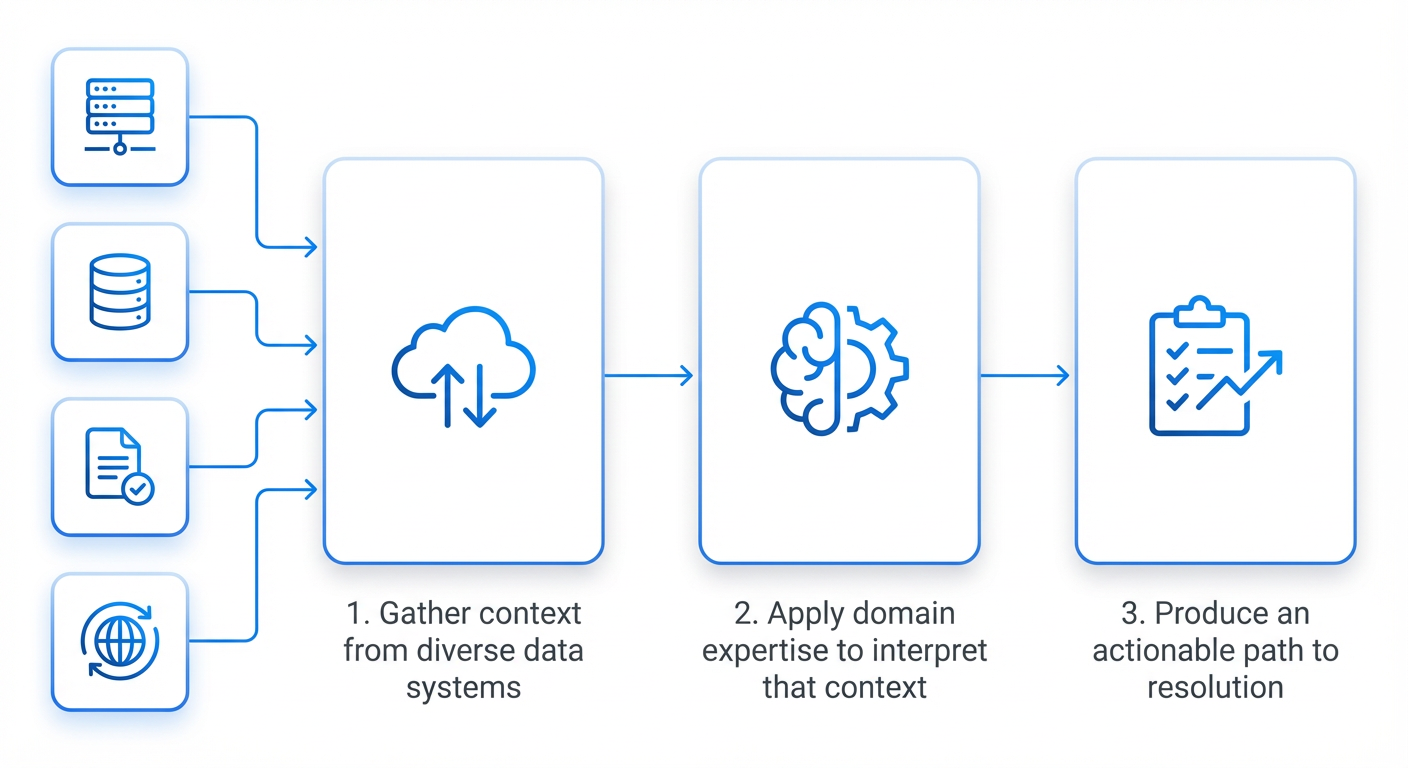
The unified AI agent platform encodes the domain expertise of senior efficiency engineers into reusable, composable skills. These agents now automate both finding and fixing performance issues. Through this technology, Meta has recovered hundreds of megawatts of power, enough to power hundreds of thousands of homes. Furthermore, hours of manual regression investigation have been compressed into mere minutes.
The program operates on two fronts: "offense" and "defense." On defense, FBDetect, Meta’s in-house regression detection tool, catches thousands of regressions weekly. Faster automated resolution means fewer megawatts are wasted compounding across the fleet. On offense, AI-assisted opportunity resolution is expanding to more product areas every half. This handles a growing volume of wins that engineers would never get to manually.
These AI systems now form the infrastructure for the Capacity Efficiency program, which has recovered hundreds of megawatts of power.
When the code you ship serves over 3 billion people, even a 0.1% performance regression can translate to significant additional power consumption. Meta’s Capacity Efficiency organization views efficiency as a two-sided effort. Offense involves proactively searching for opportunities to make existing systems more efficient and deploying them. Defense monitors resource usage in production to detect regressions, root-cause them to a pull request, and deploy mitigations.
These systems have worked well and played an important role in Meta’s efficiency efforts for years. However, actually resolving the issues they surface introduces a new bottleneck: human engineering time. Automating diagnoses can compress approximately ten hours of manual investigation into about thirty minutes. AI agents fully automate the path from an efficiency opportunity to a ready-to-review pull request. This enables the program to scale MW delivery across a growing number of product areas without proportionally scaling headcount.
Meta's ultimate goal is a self-sustaining efficiency engine where AI handles the long tail of tasks. This ensures the company continues to grow its power delivery capacity without increasing team size. It represents a significant step towards a more sustainable and efficient infrastructure.
Keep reading online — scan the code
https://go.tricuatro.com/zX9x3
© tricuatro.com
Related articles

TikTok tests AI tool to protect creators from deepfakes
The video platform is rolling out an opt-in feature allowing users to verify their identity and report unauthorized AI-generated likenesses.

Apple Sues OpenAI Over Alleged Hardware Trade Secret Theft
The Cupertino giant accuses former key employees, including Tang Tan, of stealing confidential hardware information for OpenAI's benefit and its expansion into consumer hardware.

Anthropic Tackles AI's Toughest Questions for a Responsible Future
The company launches an initiative to understand public concerns and transparently address the challenges of artificial intelligence development.
Latest news
View all
Sweet Interstellar Discovery: Erythrulose Detected in the Milky Way
Scientists from the Spanish Astrobiology Center have for the first time identified a true sugar, erythrulose, in a gas and dust cloud near our galaxy's center. This finding suggests complex molecules can form before stars and planets are born.

Paramount and Warner Bros. Merger Halted by Judge Over Antitrust Concerns
A coalition of 12 states successfully petitioned Judge Araceli Martinez-Olguin to temporarily block the deal, citing fears of higher prices and reduced content.

MIT Chip Converts Invisible Infrared Light into Crucial Data
MIT researchers developed an innovative chip detecting methane and propane using mid-infrared light, with potential for millions of pixels and optical computing.
Comments (0)
No comments yet. Be the first!
Only registered readers can comment.