
Microsoft Unveils Project Solara: AI Across a Constellation of Devices
This initiative redefines AI interaction, extending it beyond individual applications into an ecosystem of interconnected devices.

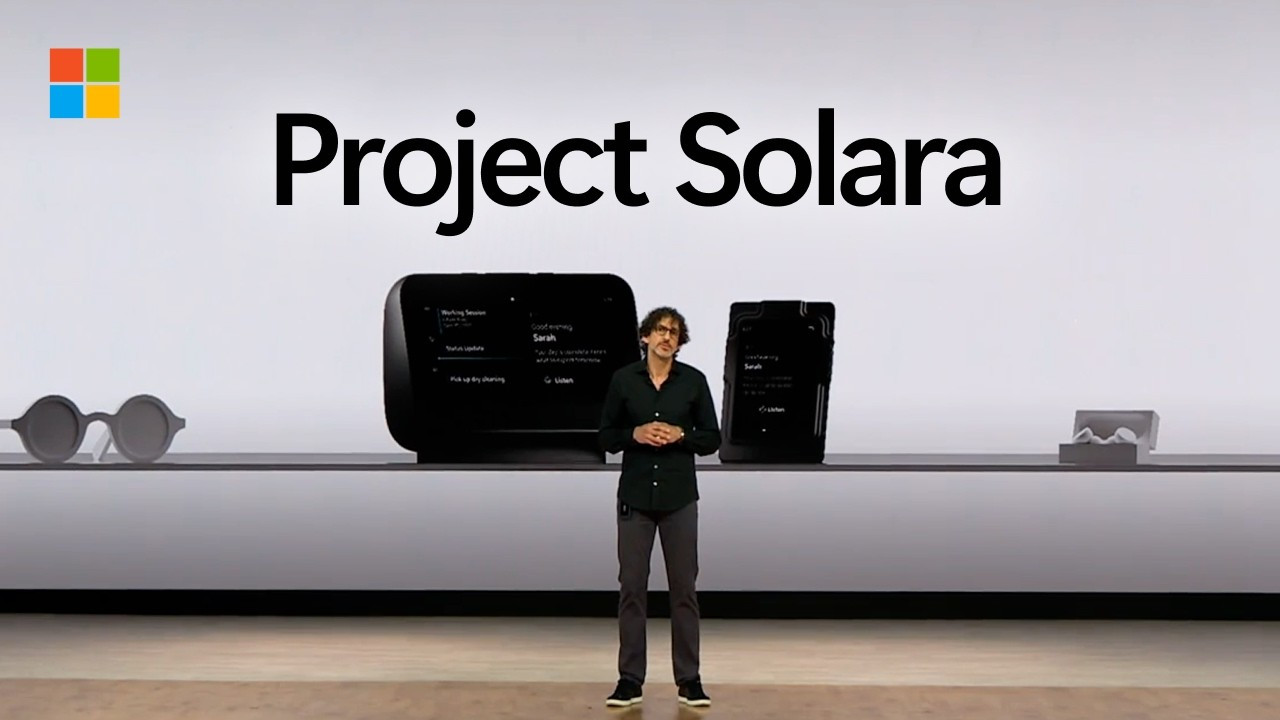
Microsoft introduced Project Solara, its ambitious vision for an "outside AI application structure" where artificial intelligence operates globally, connecting and coordinating context across multiple applications, services, devices, and time scales. This initiative aims to create a hardware ecosystem specifically designed for AI agents and transformative interaction technology.
The core insight behind Project Solara is that "the next computer is not one device. It is all these devices working together as one system," as stated during the presentation. The company focuses on extending AI agents across a "constellation of devices," bringing artificial intelligence closer to where and when users need it. This marks a fundamental shift from traditional app-centric computing.
This approach addresses two key challenges. First, the proliferation of specialized form factors often relies on custom, one-off apps and fragmented stacks, making them difficult and expensive to build, deploy, and maintain. Second, AI agents built by organizations for their specific workflows are constrained in their impact by how and where they can exist.
Project Solara offers a turnkey solution for organizations to extend their agents onto new, purpose-built, easy-to-manage form factors designed to reach the nooks and crannies where conventional computers either do not exist or are not optimal. This unique agent-first device building is enabled by three essential pillars.
These pillars include an enterprise-ready AOSP-based Microsoft device ecosystem platform. Additionally, it features an agent-driven interaction model with a just-in-time UI that adapts to the form factor. Finally, it provides extensibility, allowing organizations to bring their own agents. Azure unifies this entire system, connecting the cloud and devices.
Microsoft previewed two broad categories of concept devices: stationary and portable. The first stationary device, designed for desks and built on MediaTek silicon, allows frictionless yet protected access to Microsoft 365 Copilot, grounded in Work IQ, simply by walking up to it, thanks to Hello for Business.
This desk device acts as a dedicated, secured, ambient tool for work, surfacing what matters next in the workday and helping users think, plan, and even act by delegating tasks to agents with a simple tap or voice command. It even supports handoff experiences between devices, acting as a companion to an existing Windows PC or providing access to a cloud PC through Windows 365 and a connected monitor.
The second device category is portable, reimagining a wearable that millions of people use every day: the access badge. Built using Qualcomm silicon for wearables, this digital badge is a lightweight form factor designed for on-the-go agent interactions, adaptable across a variety of verticals and workflows.
In a healthcare example, a nurse could use this badge. From the moment the device is picked up, the right agent shapes the experience around the role and workflow, assisting with check-ins, patient records, and critical insights, all through enterprise-grade secure access. Built-in microphones enable hands-free voice-based documentation, including diarization and annotation, while the side-facing camera can verify patient vitals or scan medications.
Project Solara's flexibility is a core strength. While the stationary and portable concept devices represent specific expressions, their core reference hardware and software are designed to be highly adaptable. With just a few changes—loading a different agent, adjusting the shape, screen size, sensors, or input methods—the same foundation can adapt for many verticals such as retail, industrial, hospitality, financial services, and legal. Companies like AccuWeather, Best Buy, CBS Health, Levi's, and Target are already exploring how specialized agents and devices can improve their workflows.

Keep reading online — scan the code
https://go.tricuatro.com/microsof
© tricuatro.com
Article topics
Related articles
TikTok tests AI tool to protect creators from deepfakes
The video platform is rolling out an opt-in feature allowing users to verify their identity and report unauthorized AI-generated likenesses.
Apple Sues OpenAI Over Alleged Hardware Trade Secret Theft
The Cupertino giant accuses former key employees, including Tang Tan, of stealing confidential hardware information for OpenAI's benefit and its expansion into consumer hardware.

Anthropic Tackles AI's Toughest Questions for a Responsible Future
The company launches an initiative to understand public concerns and transparently address the challenges of artificial intelligence development.
Latest news
View all
Sweet Interstellar Discovery: Erythrulose Detected in the Milky Way
Scientists from the Spanish Astrobiology Center have for the first time identified a true sugar, erythrulose, in a gas and dust cloud near our galaxy's center. This finding suggests complex molecules can form before stars and planets are born.

Paramount and Warner Bros. Merger Halted by Judge Over Antitrust Concerns
A coalition of 12 states successfully petitioned Judge Araceli Martinez-Olguin to temporarily block the deal, citing fears of higher prices and reduced content.
MIT Chip Converts Invisible Infrared Light into Crucial Data
MIT researchers developed an innovative chip detecting methane and propane using mid-infrared light, with potential for millions of pixels and optical computing.
Comments (0)
No comments yet. Be the first!
Only registered readers can comment.