
Moss on the ISS: A Giant Leap Towards Terraforming Mars
A recent study demonstrated moss's ability to survive in space, opening exciting new possibilities. This finding brings humanity closer to the dream of transforming the Red Planet.


Scientists have achieved a significant breakthrough for the future terraforming of Mars. Last year, a study revealed that moss can survive the extreme conditions of space. This research involved covering the exterior of the International Space Station (ISS) with these primitive plants. The positive results open a tangible path toward transforming other planets.
Moss, one of the first plants on Earth, is incredibly resilient. These bryophytes can grow directly on rocks, performing photosynthesis. This vital process converts carbon dioxide into oxygen. Furthermore, they generate organic matter that enriches the soil upon their death. This prepares the ground for the growth of more complex plants.
That natural resilience was key to the space experiment. The idea was to test if moss could withstand the hostile environment outside our planet. The results were so positive that moss is now considered a promising candidate for terraforming. It could be fundamental in creating breathable atmospheres on Mars or even the Moon.
Over 80% of the mosses exposed on the ISS survived and germinated upon their return to Earth.
The study demonstrated the incredible tenacity of moss. Samples exposed on the ISS endured 283 days of freezing temperatures. They also withstood intense ultraviolet radiation. Upon returning to Earth, over 80% of the plants were still alive. They even managed to germinate when planted, an astonishing outcome.
The idea of transforming other worlds is not new, though for a long time it was largely a fantasy. Carl Sagan, in 1961, proposed terraforming Venus. He suggested seeding cyanobacteria in its clouds to produce oxygen. These bacteria perform photosynthesis, much like plants. However, it was later discovered that Venus's clouds are made of sulfuric acid. This rendered his visionary proposal unfeasible.
Despite the challenge of Venus, Mars presents much greater potential for terraforming. It is an inhospitable planet, but with promising resources. Last year, a study in the journal "Nature" explored how to transform the Red Planet. The goal is to convert it into an environment more similar to Earth. This dream, now with moss, seems one step closer to reality.
Keep reading online — scan the code
https://go.tricuatro.com/8GwmG
© tricuatro.com
Article topics
Related articles
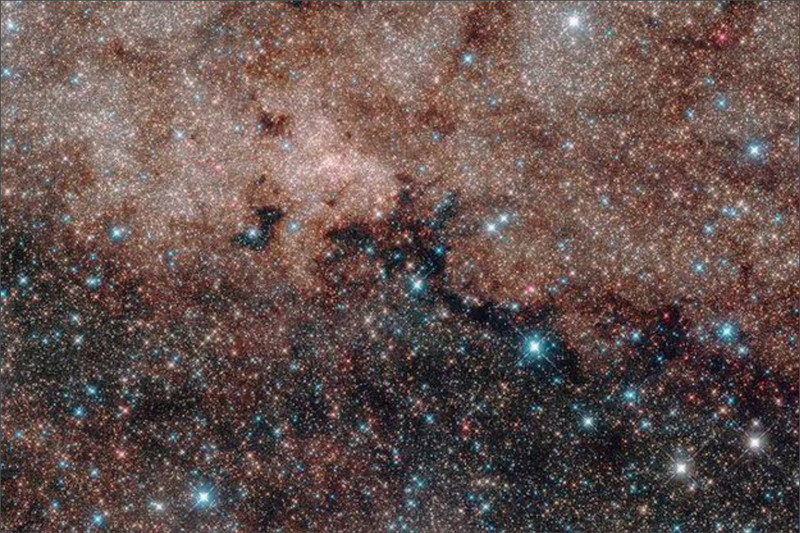
Sweet Interstellar Discovery: Erythrulose Detected in the Milky Way
Scientists from the Spanish Astrobiology Center have for the first time identified a true sugar, erythrulose, in a gas and dust cloud near our galaxy's center. This finding suggests complex molecules can form before stars and planets are born.
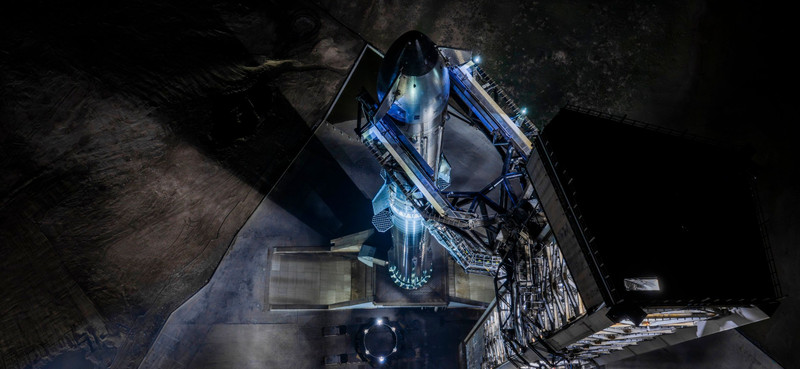
SpaceX Scrubs Starship Test Flight in South Texas
Computer systems detected an anomaly during the Super Heavy booster's engine startup sequence, forcing the mission's abort.
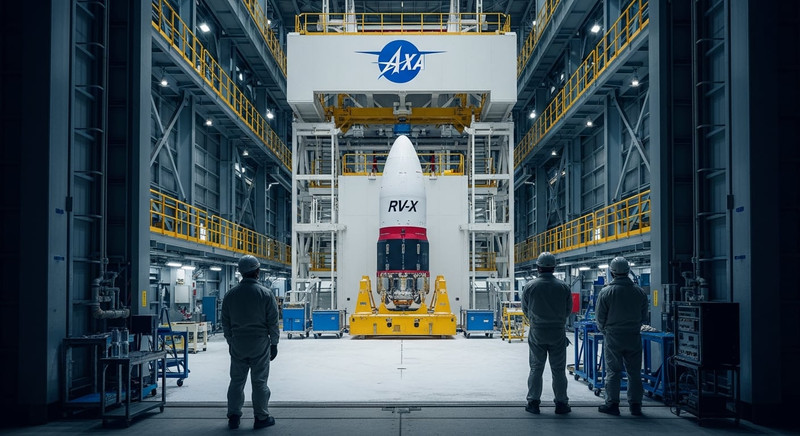
JAXA's RV-X Reusable Rocket Successfully Completes First Flight
Japan's space agency JAXA successfully tested its RV-X prototype, a critical step towards reducing costs and boosting competitiveness in the global space market.
Latest news
View all
Paramount and Warner Bros. Merger Halted by Judge Over Antitrust Concerns
A coalition of 12 states successfully petitioned Judge Araceli Martinez-Olguin to temporarily block the deal, citing fears of higher prices and reduced content.

MIT Chip Converts Invisible Infrared Light into Crucial Data
MIT researchers developed an innovative chip detecting methane and propane using mid-infrared light, with potential for millions of pixels and optical computing.

Assassin's Creed Black Flag Resynced Smashes 3 Million Sales, New Game Plus Announced
Ubisoft's successful re-release of the pirate classic continues to break records, confirming one of the most requested features from the gaming community.
Comments (0)
No comments yet. Be the first!
Only registered readers can comment.