
NASA Enhances Asteroid Detection and Deflection Capabilities
The US space agency advances planetary defense techniques following the successful DART mission and the upcoming NEO Surveyor observatory.


NASA is significantly boosting its efforts to safeguard Earth from potential asteroid impacts, a mission that gained critical relevance when the asteroid 2024 YR4 registered an impact probability exceeding 3% in February 2025, as reported by Europa Press, before it was ultimately deemed no longer a threat.
To proactively address future risks, the space agency successfully tested a deflection technique. This occurred in 2022 with the Double Asteroid Redirection Test (DART) mission, an innovative project that demonstrated the feasibility of altering the trajectory of a space object.
The DART spacecraft's impact was both direct and effective. The spacecraft impacted the asteroid Dimorphos and reduced its orbital period around Didymos by 33 minutes.
The spacecraft impacted the asteroid Dimorphos and reduced its orbital period around Didymos by 33 minutes.
While Didymos, the larger asteroid, did not pose a direct danger to our planet, the outcome of the DART mission proved invaluable. This test provided NASA with a verified technique to study how to respond to a real threat in the future.
This precedent marks a crucial step in NASA's strategy, aiming to move beyond mere detection. The goal is to develop an effective response capability to protect Earth, transforming passive vigilance into active planetary defense.
Complementing these endeavors, the agency is also preparing for the launch of the Near-Earth Object Surveyor (NEO Surveyor) space observatory. This will be the first spacecraft specifically designed with the sole purpose of searching for asteroids and comets that could pose a risk to the planet.
NEO Surveyor is scheduled for launch in the boreal autumn of 2027. Once operational, NASA plans to make all data obtained publicly available through its archives, fostering transparency and global scientific collaboration.
The incident involving asteroid 2024 YR4, though resolved, highlighted that many near-Earth objects remain undiscovered. These celestial bodies could represent a potential risk, underscoring the critical importance of early detection and continuous monitoring.
Despite the inherently low probability of an asteroid impact at any given moment, maintaining open data and expanding early detection remains a central component of planetary surveillance, a key lesson reinforced by the 2024 YR4 episode.
Keep reading online — scan the code
https://go.tricuatro.com/nasa-enh
© tricuatro.com
Article topics
Related articles
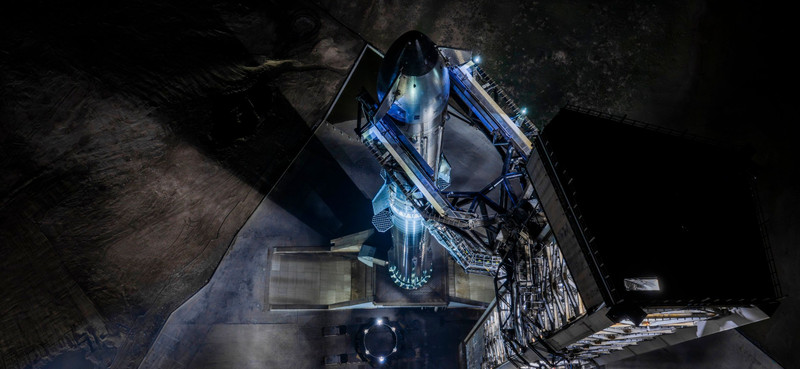
SpaceX Scrubs Starship Test Flight in South Texas
Computer systems detected an anomaly during the Super Heavy booster's engine startup sequence, forcing the mission's abort.
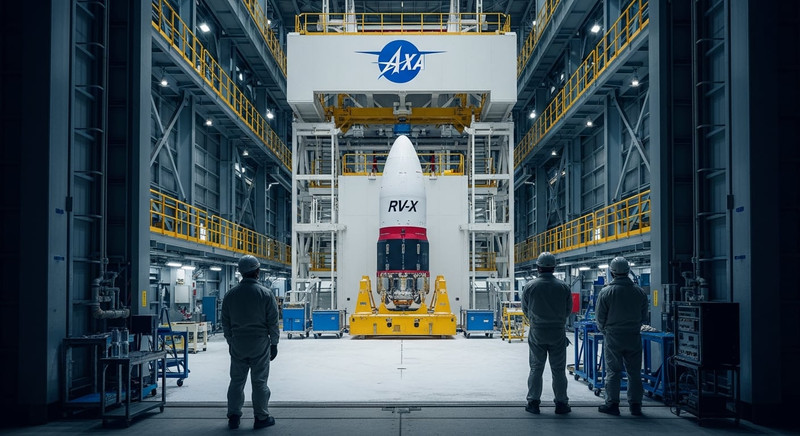
JAXA's RV-X Reusable Rocket Successfully Completes First Flight
Japan's space agency JAXA successfully tested its RV-X prototype, a critical step towards reducing costs and boosting competitiveness in the global space market.

China's Great Green Wall: Artificial Forests Outpace Natural Growth
China planted 66 billion trees over nearly half a century to combat desertification, and a new study shows they grow faster than natural forests, albeit with important nuances.
Latest news
View all
MIT Chip Converts Invisible Infrared Light into Crucial Data
MIT researchers developed an innovative chip detecting methane and propane using mid-infrared light, with potential for millions of pixels and optical computing.

Assassin's Creed Black Flag Resynced Smashes 3 Million Sales, New Game Plus Announced
Ubisoft's successful re-release of the pirate classic continues to break records, confirming one of the most requested features from the gaming community.

TikTok tests AI tool to protect creators from deepfakes
The video platform is rolling out an opt-in feature allowing users to verify their identity and report unauthorized AI-generated likenesses.
Comments (0)
No comments yet. Be the first!
Only registered readers can comment.