
NASA Launches Lunar Base Initiative with Six Companies and 25 Missions
The US space agency has initiated the first phase of its ambitious lunar project, awarding multi-million dollar contracts and outlining a detailed plan to explore and prepare the lunar surface.

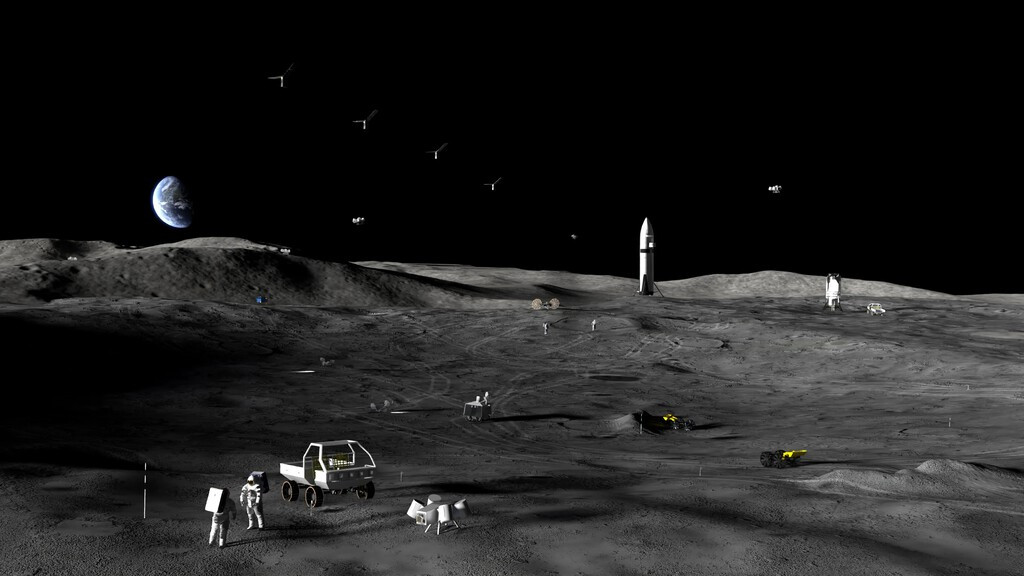
With an ambitious plan encompassing 25 missions and 21 lunar landings, NASA announced on Tuesday the initial steps to establish its lunar base at the south pole. This involves investing hundreds of millions of dollars in six key companies tasked with developing the necessary foundational technologies. This foundational phase aims to explore the polar region, test various technologies, and prepare critical surface operations.
The selected companies leading this endeavor are Blue Origin, Astrobotic, Intuitive Machines, Astrolab, Lunar Outpost, and Firefly Aerospace. Each will play a specific role in this initial construction stage, laying the groundwork for a sustained human presence on our natural satellite.
NASA's plan for this year includes the launch of the first three missions. The first, named "Moon Base 1," will be managed by Blue Origin, Jeff Bezos's company. This mission will utilize its Blue Moon Mark 1 lander, a smaller version of the Blue Moon Mark 2 being prepared for crewed Artemis missions.
Moon Base 1's payload is crucial for understanding the lunar environment. It will include "Stereoscopic Cameras for Lunar-Surface Plume Studies," designed to analyze how thrusters interact with the lunar regolith. Additionally, it will carry the "Laser Retroreflector Array," which will enable orbiting spacecraft to determine their precise location using reflected laser light. This mission is expected to land in the Shackleton crater in autumn 2026 and will be vital for confirming the feasibility of landings near the future base.
The second mission, "Moon Base 2," also scheduled for late 2026, will be the responsibility of Astrobotic. Its Griffin lander will transport 500 kg of instrumentation, including a specialized rover to study the surface where the base will be built. This vehicle will be fundamental for maturing the mobility systems that future crewed vehicles will use.
Finally, the third mission of this initial stage, "Moon Base 3," has been awarded to Intuitive Machines. Their Nova-C Trinity lunar module will focus on investigating lunar swirls and the behavior of materials under extreme space conditions. An interesting detail is that this mission will include payloads from the European Space Agency and the Korean Astronomy and Space Science Institute, showcasing international collaboration in lunar exploration.
For the mobility of future astronauts, NASA has commissioned the development of two crewed lunar vehicles, known as "boogies," from Astrolab and Lunar Outpost. These vehicles, capable of operating with or without a crew, will be essential for traversing the complex topography of the lunar south pole.
Firefly Aerospace, on the other hand, has been tasked with delivering four "Moonfall" drones to the Moon. Their primary role will be to inspect the area for the best landing sites for crewed missions. However, they have a much more peculiar function: according to Carlos García-Galan, executive director of NASA's lunar base program, these drones will also be positioned at the corners to delimit the perimeter of the lunar base, physically marking the operational area.
This first development phase will extend until 2029. Following this, a second phase will commence and run until 2032, focusing on the construction of the base's permanent infrastructure, including the electrical installation. This represents a monumental step towards an era where human presence on the Moon is not merely temporary, but a sustained reality.

Keep reading online — scan the code
https://go.tricuatro.com/nasa-lau
© tricuatro.com
Article topics
Related articles
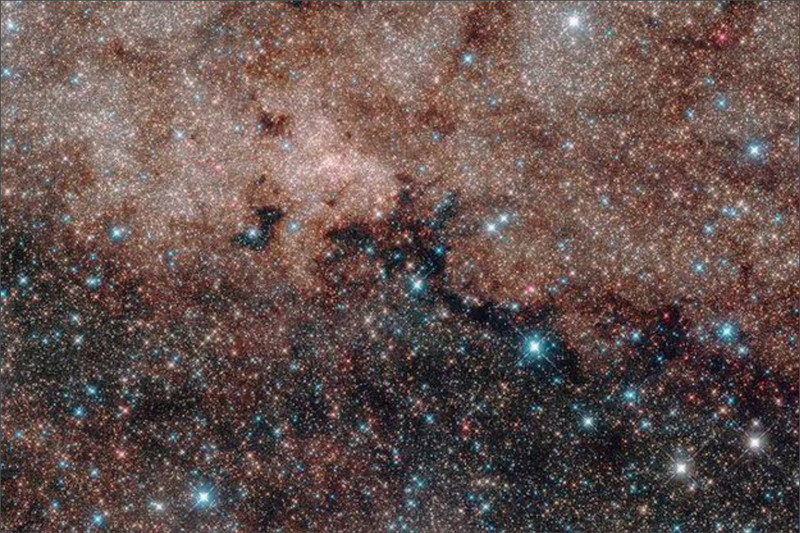
Sweet Interstellar Discovery: Erythrulose Detected in the Milky Way
Scientists from the Spanish Astrobiology Center have for the first time identified a true sugar, erythrulose, in a gas and dust cloud near our galaxy's center. This finding suggests complex molecules can form before stars and planets are born.
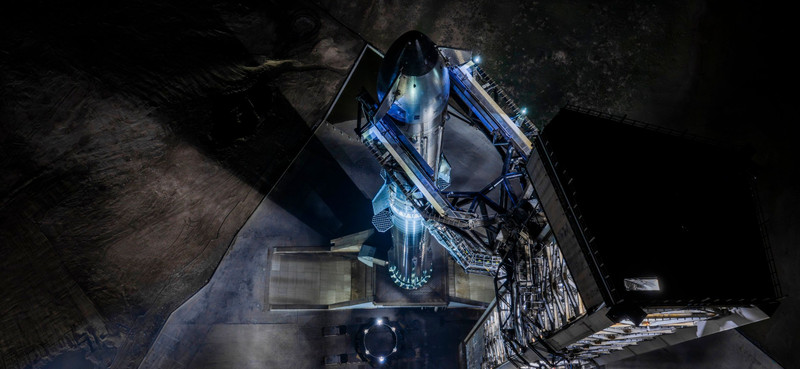
SpaceX Scrubs Starship Test Flight in South Texas
Computer systems detected an anomaly during the Super Heavy booster's engine startup sequence, forcing the mission's abort.
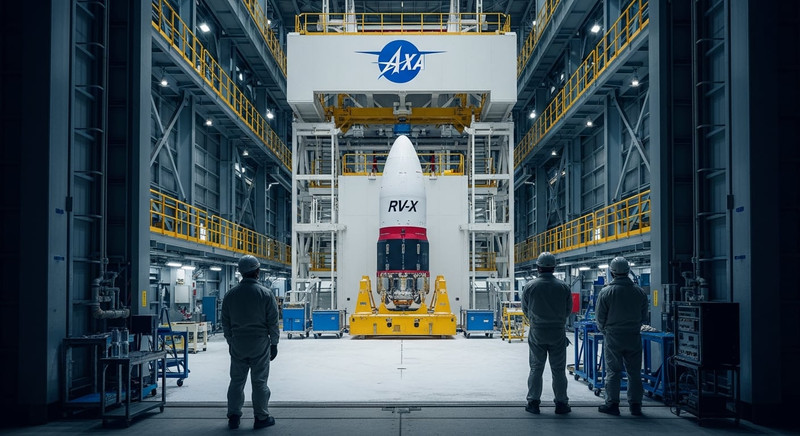
JAXA's RV-X Reusable Rocket Successfully Completes First Flight
Japan's space agency JAXA successfully tested its RV-X prototype, a critical step towards reducing costs and boosting competitiveness in the global space market.
Latest news
View all
Paramount and Warner Bros. Merger Halted by Judge Over Antitrust Concerns
A coalition of 12 states successfully petitioned Judge Araceli Martinez-Olguin to temporarily block the deal, citing fears of higher prices and reduced content.

MIT Chip Converts Invisible Infrared Light into Crucial Data
MIT researchers developed an innovative chip detecting methane and propane using mid-infrared light, with potential for millions of pixels and optical computing.

Assassin's Creed Black Flag Resynced Smashes 3 Million Sales, New Game Plus Announced
Ubisoft's successful re-release of the pirate classic continues to break records, confirming one of the most requested features from the gaming community.
Comments (0)
No comments yet. Be the first!
Only registered readers can comment.