
NASA Reveals Stunning Details of Meteor That Shook the United States
The space agency has shared new information about the fireball that released energy equivalent to 230 tons of TNT, shaking a vast region.

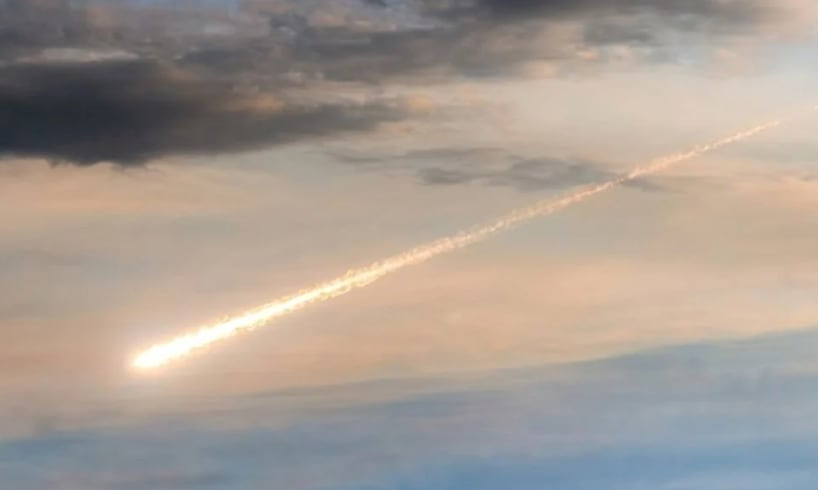
NASA has unveiled unprecedented details about the meteor that recently flew over the United States, confirming it released energy equivalent to 230 tons of TNT. This powerful blast rattled buildings and triggered alarms across an area stretching from Massachusetts to Maine and from Delaware to Montreal, Canada.
The magnitude of this atmospheric explosion far exceeded initial estimates, startling thousands of residents. The object did not become a meteorite because it disintegrated completely at high altitude, but its passage left an unmistakable sonic and vibrational footprint across the region.
According to the technical reconstruction released by NASA, the meteor was approximately 1.52 meters wide and had a mass comparable to that of an elephant, up to seven tons. It traveled at an astonishing speed of 67,600 kilometers per hour through the atmosphere, covering a trajectory of 41.8 kilometers before its disintegration, generating a double boom.
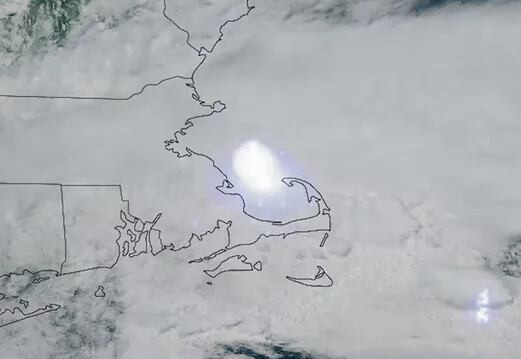
The immediate hours following the event were marked by a wave of questions on social media. Residents across Massachusetts, Rhode Island, and New Hampshire queried online if others had felt or heard the loud boom. Many witnesses reported that dogs reacted nervously, and some people initially thought it was an earthquake or a tree falling on their homes.
The widespread confusion even reached official institutions. The U.S. Geological Survey (USGS) received hundreds of reports through its “Did You Feel It?” system, typically designed for perceived seismic movements. However, seismographs detected no tectonic activity, confirming the vibrations originated from the meteor's atmospheric explosion rather than an earthquake.
The American Meteor Society also received dozens of reports from a wide region, extending from Delaware to Montreal. Some witnesses described seeing a brilliant fireball streaking across the sky before it disintegrated. Notably, a resident of Peabody, Massachusetts, recounted initially believing a large tree had fallen on their house.
NASA experts explained that the phenomenon is what astronomers call a “fireball,” an exceptionally bright meteor. Upon entering the atmosphere at extreme velocities, friction with the air dramatically raises the material's temperature, causing it to fragment and, in some cases, produce atmospheric explosions known as “airbursts.”
The sheer energy released by the meteor was one of the data points that most surprised both scientists and the public. The official report confirmed the meteor was composed of natural material, ruling out space debris. The explosion occurred at high altitude, with fragments falling into Cape Cod Bay in southeastern Massachusetts.
Fireballs hold a central place in astronomy due to their potential to generate high-energy atmospheric explosions. This particular explosion's intensity meant its sound was perceived across four states and parts of Canada over 300 kilometers from the entry point.
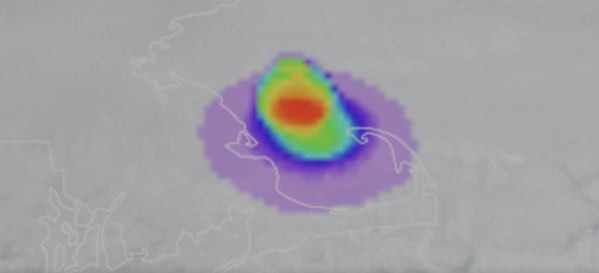
This episode also tested the effectiveness of citizen alert and reporting systems. Hundreds of people turned to official platforms and social media to share their experiences, with reports emerging in Massachusetts and Rhode Island and extending to localities in northeastern New England, New Hampshire, and even Maine, whose capital is 400 kilometers from Massachusetts, as highlighted by NASA in its report.
The case of the meteor that shook the northeastern United States offers an opportunity to understand how space object surveillance works. NASA and other international agencies maintain monitoring systems capable of detecting and analyzing space rock entries into the atmosphere, assessing both potential risks and the frequency of these occurrences.
Meteors can enter Earth's atmosphere at any time, but only on rare occasions do they produce explosions intense enough to be widely perceived by the population. Most disintegrate harmlessly at high altitudes. When the mass, velocity, and entry angle align, the result can be a visible fireball and an audible boom over long distances, with the released energy directly proportional to the object's mass and speed.
NASA advises maintaining calm during such events and trusting available monitoring and alert systems. Scientists emphasize that meteor impacts in inhabited areas are infrequent. Security and surveillance protocols are continuously updated, and information is quickly disseminated to prevent the spread of rumors or erroneous interpretations.
“This was a daylight bolide that produced meteorites falling right in the middle of Cape Cod Bay,” NASA specified in its latest report. The event showcased the value of clear scientific communication and the importance of public education in addressing the confusion that unforeseen astronomical phenomena can generate.
Keep reading online — scan the code
https://go.tricuatro.com/nasa-rev
© tricuatro.com
Article topics
Related articles
Sweet Interstellar Discovery: Erythrulose Detected in the Milky Way
Scientists from the Spanish Astrobiology Center have for the first time identified a true sugar, erythrulose, in a gas and dust cloud near our galaxy's center. This finding suggests complex molecules can form before stars and planets are born.
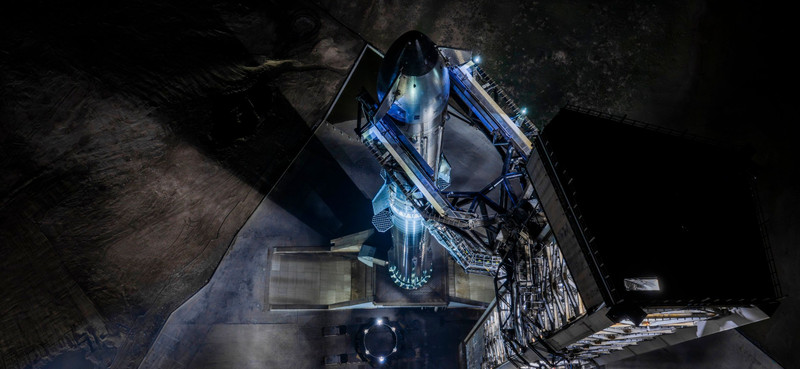
SpaceX Scrubs Starship Test Flight in South Texas
Computer systems detected an anomaly during the Super Heavy booster's engine startup sequence, forcing the mission's abort.
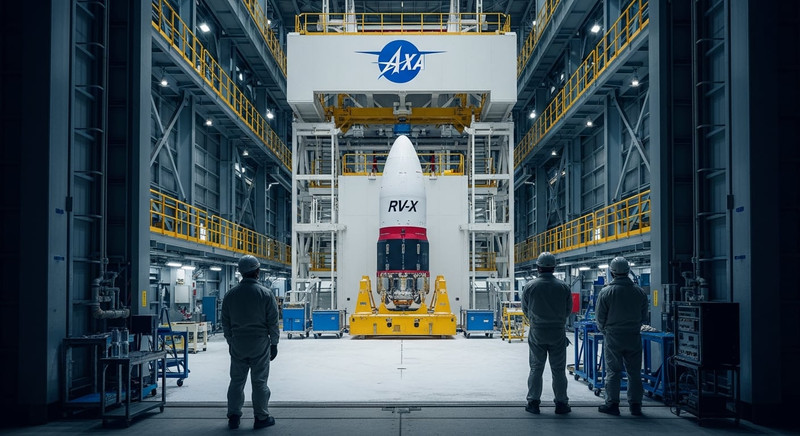
JAXA's RV-X Reusable Rocket Successfully Completes First Flight
Japan's space agency JAXA successfully tested its RV-X prototype, a critical step towards reducing costs and boosting competitiveness in the global space market.
Latest news
View all
Paramount and Warner Bros. Merger Halted by Judge Over Antitrust Concerns
A coalition of 12 states successfully petitioned Judge Araceli Martinez-Olguin to temporarily block the deal, citing fears of higher prices and reduced content.

MIT Chip Converts Invisible Infrared Light into Crucial Data
MIT researchers developed an innovative chip detecting methane and propane using mid-infrared light, with potential for millions of pixels and optical computing.

Assassin's Creed Black Flag Resynced Smashes 3 Million Sales, New Game Plus Announced
Ubisoft's successful re-release of the pirate classic continues to break records, confirming one of the most requested features from the gaming community.
Comments (0)
No comments yet. Be the first!
Only registered readers can comment.