
Neuroscience Reveals Procrastination is a Survival Instinct
Forget the idea that procrastination is laziness or poor time management. Science shows it's a complex brain response designed to protect our emotions.


Procrastination, that common habit of delaying important tasks, is far more than a simple time management issue. Modern neuroscience now reveals it as a complex brain survival strategy. This groundbreaking discovery redefines our understanding of why we avoid essential duties. We now know it is an emotional regulation crisis, not merely laziness.
For decades, popular culture told us that procrastination was a failure of organization. It was even associated with a lack of discipline. However, scientific research offers a very different perspective. It suggests our brain seeks to protect us from uncomfortable sensations.
To understand procrastination, it is essential to look at our brain's anatomy. This organ often functions as an internal battlefield. On one side, we have the limbic system, one of the brain's most primitive parts. Its primary function is to keep us alive, away from pain, and seeking immediate pleasure.
On the other side, we find the prefrontal cortex, the evolutionarily more “modern” area. It is located right at the front of the brain. This is where rational thought, long-term planning, and logic reside. These two areas often conflict when we face challenges.
Procrastination is not an organizational failure; it is an emotional regulation crisis.
A 2021 review already indicated that these areas activate when facing tasks that generate anxiety, boredom, or insecurity. Think about studying for an exam or submitting a difficult project. The limbic system detects this situation as a “threat.” It automatically “hijacks” the prefrontal cortex. It prioritizes immediate emotional relief, like scrolling Instagram, over the long-term benefit of starting to study.
This year, a new study took a crucial step in understanding this brain system. It identified a specific neural circuit in primates that acts as a “brake” on motivation. This circuit connects two parts of the brain: the ventral striatum (VS) with the ventral pallidum (VP).
Researchers discovered that this VS-VP circuit activates when we face tasks associated with discomfort or the possibility of failure. It inhibits action, functioning as an extreme emotional protection mechanism. The study's most impactful finding was that interrupting this circuit in the lab immediately restored subjects' motivation. It was like “releasing the brake” and tackling the difficult task without hesitation.
This new line of research aligns with previous studies. Those investigations already associated procrastination with stress, fear of failure, and anxiety. So, the next time you find yourself putting something off, remember your brain isn't being lazy. It is trying to protect you, though not always in the best way. Understanding this is the first step to managing it better!
Keep reading online — scan the code
https://go.tricuatro.com/U329E
© tricuatro.com
Article topics
Related articles

Sweet Interstellar Discovery: Erythrulose Detected in the Milky Way
Scientists from the Spanish Astrobiology Center have for the first time identified a true sugar, erythrulose, in a gas and dust cloud near our galaxy's center. This finding suggests complex molecules can form before stars and planets are born.
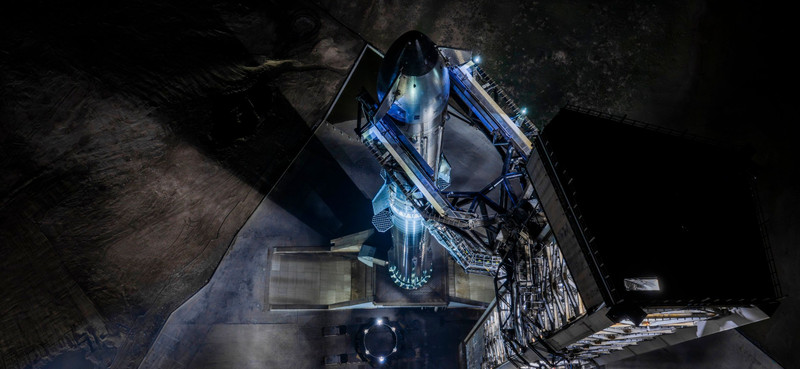
SpaceX Scrubs Starship Test Flight in South Texas
Computer systems detected an anomaly during the Super Heavy booster's engine startup sequence, forcing the mission's abort.

JAXA's RV-X Reusable Rocket Successfully Completes First Flight
Japan's space agency JAXA successfully tested its RV-X prototype, a critical step towards reducing costs and boosting competitiveness in the global space market.
Latest news
View all
Paramount and Warner Bros. Merger Halted by Judge Over Antitrust Concerns
A coalition of 12 states successfully petitioned Judge Araceli Martinez-Olguin to temporarily block the deal, citing fears of higher prices and reduced content.

MIT Chip Converts Invisible Infrared Light into Crucial Data
MIT researchers developed an innovative chip detecting methane and propane using mid-infrared light, with potential for millions of pixels and optical computing.

Assassin's Creed Black Flag Resynced Smashes 3 Million Sales, New Game Plus Announced
Ubisoft's successful re-release of the pirate classic continues to break records, confirming one of the most requested features from the gaming community.
Comments (0)
No comments yet. Be the first!
Only registered readers can comment.