
New Kind of Dark Matter Could Explain Universe’s Mysteries
Scientists are investigating an innovative proposal: dark matter interacts with itself. This model promises to explain anomalies in galactic matter distribution.


Scientists within the astrophysics community are investigating a new type of dark matter that could unravel some of the universe's most persistent mysteries. This innovative proposal suggests that dark matter particles are not entirely "antisocial" but interact with each other. The research aims to offer solutions to observed anomalies in the distribution of matter across the cosmos. This advancement is crucial for refining our understanding of how galaxies form and evolve.
Dark matter is an invisible substance that neither emits nor reflects light, yet its presence is inferred by its gravitational effects. It constitutes approximately 27% of the universe's total mass-energy. Without it, galaxies would not rotate as rapidly as they do, and the large-scale structure of the cosmos would not have formed. It remains one of modern physics' greatest enigmas.
The standard cosmological model posits the existence of "cold dark matter" (CDM), whose particles barely interact with each other. Imagine a crowd of people who completely ignore one another. However, this model faces challenges in explaining certain observations in small galaxies. This is where the concept of "self-interacting dark matter" (SIDM) comes into play.
Self-interacting dark matter (SIDM) proposes that its particles do collide and scatter energy among themselves. A scientist described it this way: "The difference is like a crowd of people who ignore each other versus one where everyone is constantly bumping into one another." These internal interactions could alter how dark matter is distributed.
This new approach could resolve issues like the "cusp-halo problem" in galactic centers. Self-interacting dark matter would smooth out matter concentrations in galactic centers. It might also explain the scarcity of small satellite galaxies predicted by the CDM model. It offers a compelling alternative to align cosmological simulations with real observations.
While still a theoretical hypothesis, self-interacting dark matter opens new avenues for research. Scientists will continue to search for observational and experimental evidence supporting this model. Its confirmation would radically transform our view of the universe. It would bring us closer to understanding the true nature of this mysterious cosmic component.
Keep reading online — scan the code
https://go.tricuatro.com/ekErD
© tricuatro.com
Article topics
Related articles
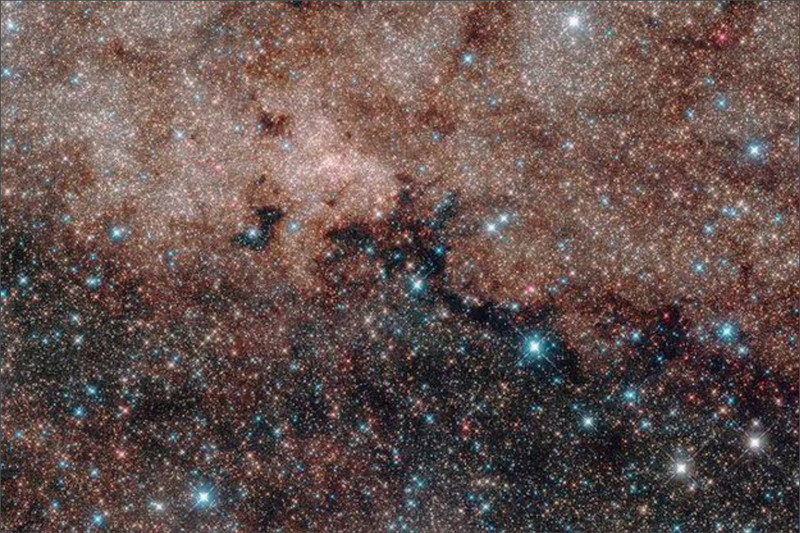
Sweet Interstellar Discovery: Erythrulose Detected in the Milky Way
Scientists from the Spanish Astrobiology Center have for the first time identified a true sugar, erythrulose, in a gas and dust cloud near our galaxy's center. This finding suggests complex molecules can form before stars and planets are born.
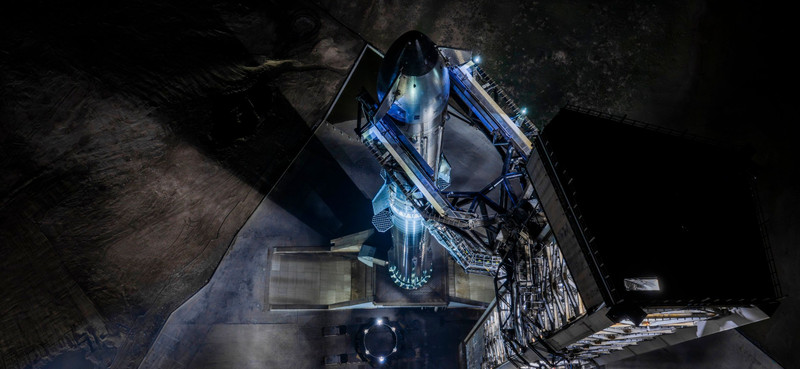
SpaceX Scrubs Starship Test Flight in South Texas
Computer systems detected an anomaly during the Super Heavy booster's engine startup sequence, forcing the mission's abort.

JAXA's RV-X Reusable Rocket Successfully Completes First Flight
Japan's space agency JAXA successfully tested its RV-X prototype, a critical step towards reducing costs and boosting competitiveness in the global space market.
Latest news
View all
Paramount and Warner Bros. Merger Halted by Judge Over Antitrust Concerns
A coalition of 12 states successfully petitioned Judge Araceli Martinez-Olguin to temporarily block the deal, citing fears of higher prices and reduced content.
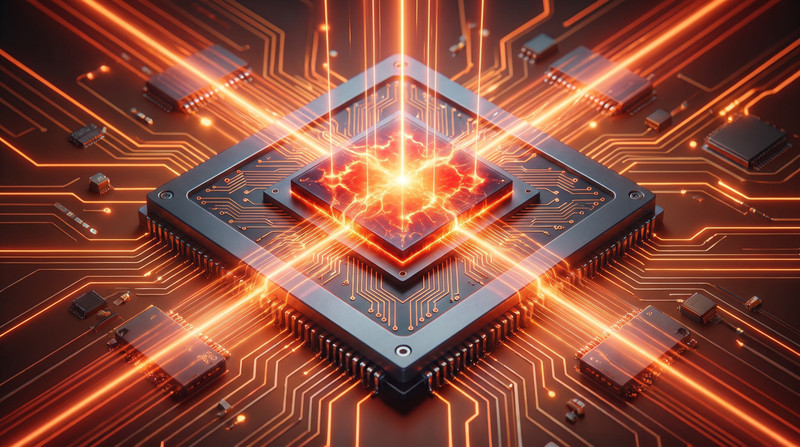
MIT Chip Converts Invisible Infrared Light into Crucial Data
MIT researchers developed an innovative chip detecting methane and propane using mid-infrared light, with potential for millions of pixels and optical computing.

Assassin's Creed Black Flag Resynced Smashes 3 Million Sales, New Game Plus Announced
Ubisoft's successful re-release of the pirate classic continues to break records, confirming one of the most requested features from the gaming community.
Comments (0)
No comments yet. Be the first!
Only registered readers can comment.