
Northrop Grumman CRS-24 Mission: A Critical Boost for Science on the International Space Station
Northrop Grumman's Cygnus XL cargo spacecraft, propelled by a SpaceX Falcon 9 rocket, has begun its journey to the International Space Station, carrying over 11,000 pounds of vital supplies and cutting-edge scientific experiments. This CRS-24 mission promises to significantly advance key areas of space and terrestrial research.

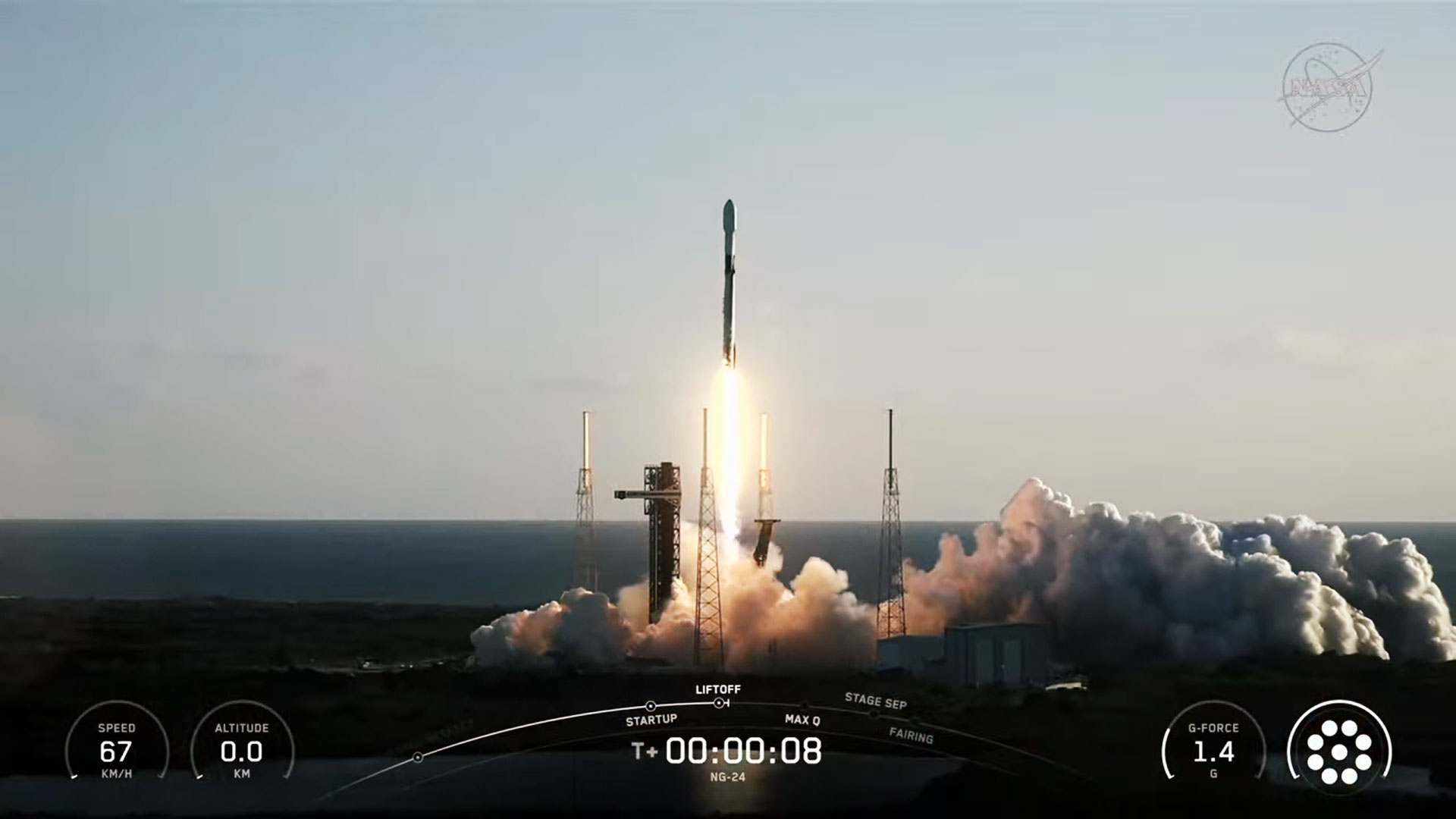
Space exploration continues its relentless march forward, and NASA's recent Northrop Grumman Commercial Resupply Services 24 (CRS-24) mission stands as a vibrant testament to this progress. Successfully launched by the agency, this vital mission transports an impressive payload of science, technology demonstrations, and essential crew supplies to the International Space Station (ISS). The launch, which took place on Saturday, April 11, 2026, marks another chapter in the collaboration between space agencies and private industry, ensuring the continuous flow of resources necessary to sustain human presence and research in orbit.
The Launch and the Cygnus XL Spacecraft
The liftoff of Northrop Grumman’s Cygnus XL cargo spacecraft was a display of precision and power. Propelled by a SpaceX Falcon 9 rocket, the vessel soared from Space Launch Complex 40 at Cape Canaveral Space Force Station in Florida at 7:41 a.m. EDT. Carrying approximately 11,000 pounds (about 5,000 kilograms) of cargo, the Cygnus XL, named S.S. Steven R. Nagel in honor of the late NASA astronaut who flew four space shuttle missions, is now en route to its rendezvous with the orbiting laboratory. This tribute to Steven R. Nagel underscores the rich history and legacy of the pioneers who made space exploration possible, reminding us of the dedication and courage required to reach for the stars.
Crucial Maneuvers at the International Space Station
The arrival of the Cygnus XL at the International Space Station is scheduled for Monday, April 13. Live coverage of this crucial event will begin at 12 p.m. EDT, and space enthusiasts can follow along via NASA+, Amazon Prime, and the agency’s YouTube channel. The spacecraft is expected to be captured at 12:50 p.m. by the station’s Canadarm2 robotic arm, a delicate operation that will be executed by NASA astronauts Jack Hathaway and Chris Williams. Following capture, the Cygnus XL will be installed on the Unity module’s Earth-facing port for cargo unloading. These maneuvers are a reminder of the complexity and coordination required to maintain an outpost in space, where every step is meticulously planned and executed.
Science Aboard: Advancing Research
The heart of the CRS-24 mission lies in its scientific payload. The Cygnus XL carries dozens of research experiments that will be conducted during Expeditions 74 and 75. Among the most notable is a new module designed to advance quantum science, with the potential to dramatically improve computing technology and contribute to the search for dark matter, opening new frontiers in fundamental physics. Additionally, hardware is included to produce a greater number of therapeutic stem cells, which could revolutionize treatments for blood diseases and cancer on Earth. The mission also carries model organisms to study the gut microbiome, a field with significant implications for human health and adaptation to extreme environments, and a receiver that could enhance space weather models, crucial for protecting critical infrastructure like GPS and radar from the effects of solar storms. These experiments represent just a fraction of the hundreds of investigations continuously conducted aboard the ISS, spanning biology, biotechnology, Earth and space science, and technology development, all aimed at expanding our knowledge and improving life on Earth.
Impact and Future of Resupply Missions
The Cygnus XL spacecraft is scheduled to remain docked to the International Space Station until October, serving not only as a storage facility for supplies but also as a vital component for waste management. At the end of its mission, the spacecraft will undock, loaded with thousands of pounds of trash from the station, and perform a controlled re-entry into Earth’s atmosphere, where it will harmlessly burn up. This cycle of delivery and disposal is fundamental to the sustainability of long-term operations on the ISS, ensuring a safe and functional environment for astronauts. Commercial resupply missions like CRS-24 are cornerstones of NASA's strategy to maintain a robust presence in space, allowing astronauts to focus on research that benefits humanity and paves the way for future explorations beyond low-Earth orbit, including missions to the Moon and Mars.
Keep reading online — scan the code
https://go.tricuatro.com/vAap6
© tricuatro.com
Article topics
Related articles
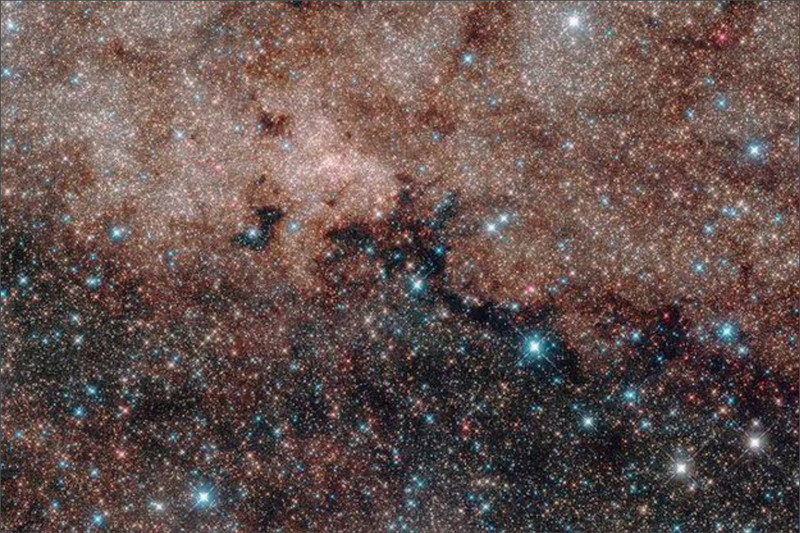
Sweet Interstellar Discovery: Erythrulose Detected in the Milky Way
Scientists from the Spanish Astrobiology Center have for the first time identified a true sugar, erythrulose, in a gas and dust cloud near our galaxy's center. This finding suggests complex molecules can form before stars and planets are born.
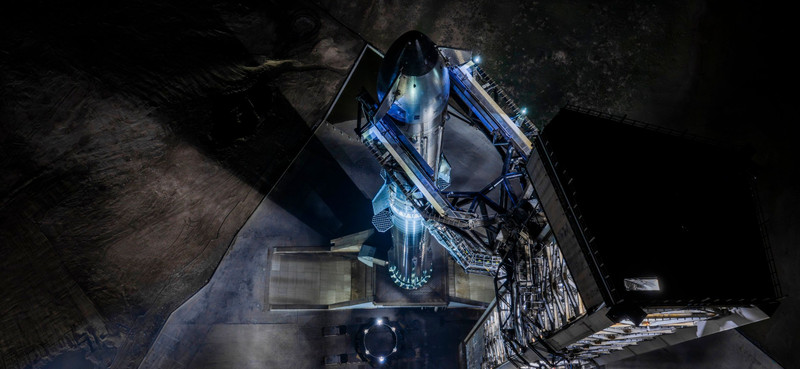
SpaceX Scrubs Starship Test Flight in South Texas
Computer systems detected an anomaly during the Super Heavy booster's engine startup sequence, forcing the mission's abort.
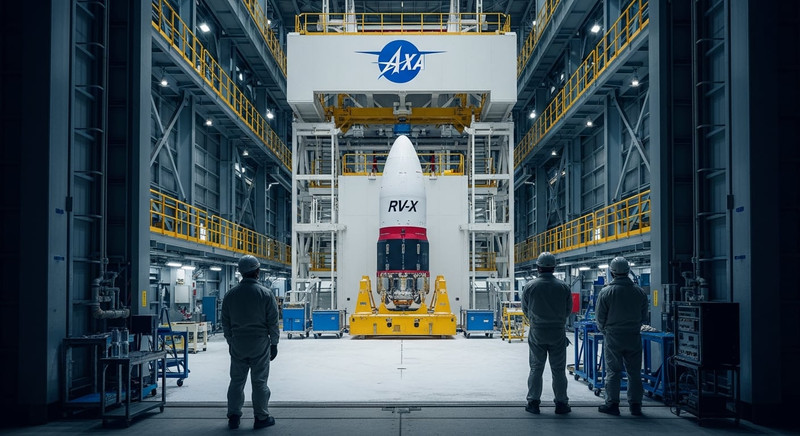
JAXA's RV-X Reusable Rocket Successfully Completes First Flight
Japan's space agency JAXA successfully tested its RV-X prototype, a critical step towards reducing costs and boosting competitiveness in the global space market.
Latest news
View all
Paramount and Warner Bros. Merger Halted by Judge Over Antitrust Concerns
A coalition of 12 states successfully petitioned Judge Araceli Martinez-Olguin to temporarily block the deal, citing fears of higher prices and reduced content.

MIT Chip Converts Invisible Infrared Light into Crucial Data
MIT researchers developed an innovative chip detecting methane and propane using mid-infrared light, with potential for millions of pixels and optical computing.

Assassin's Creed Black Flag Resynced Smashes 3 Million Sales, New Game Plus Announced
Ubisoft's successful re-release of the pirate classic continues to break records, confirming one of the most requested features from the gaming community.
Comments (0)
No comments yet. Be the first!
Only registered readers can comment.