
OpenAI's TBPN Acquisition: A Seismic Shift in Digital Journalism
OpenAI has made its first foray into the media sector with the acquisition of TBPN, a move poised to redefine the future of news production and consumption.

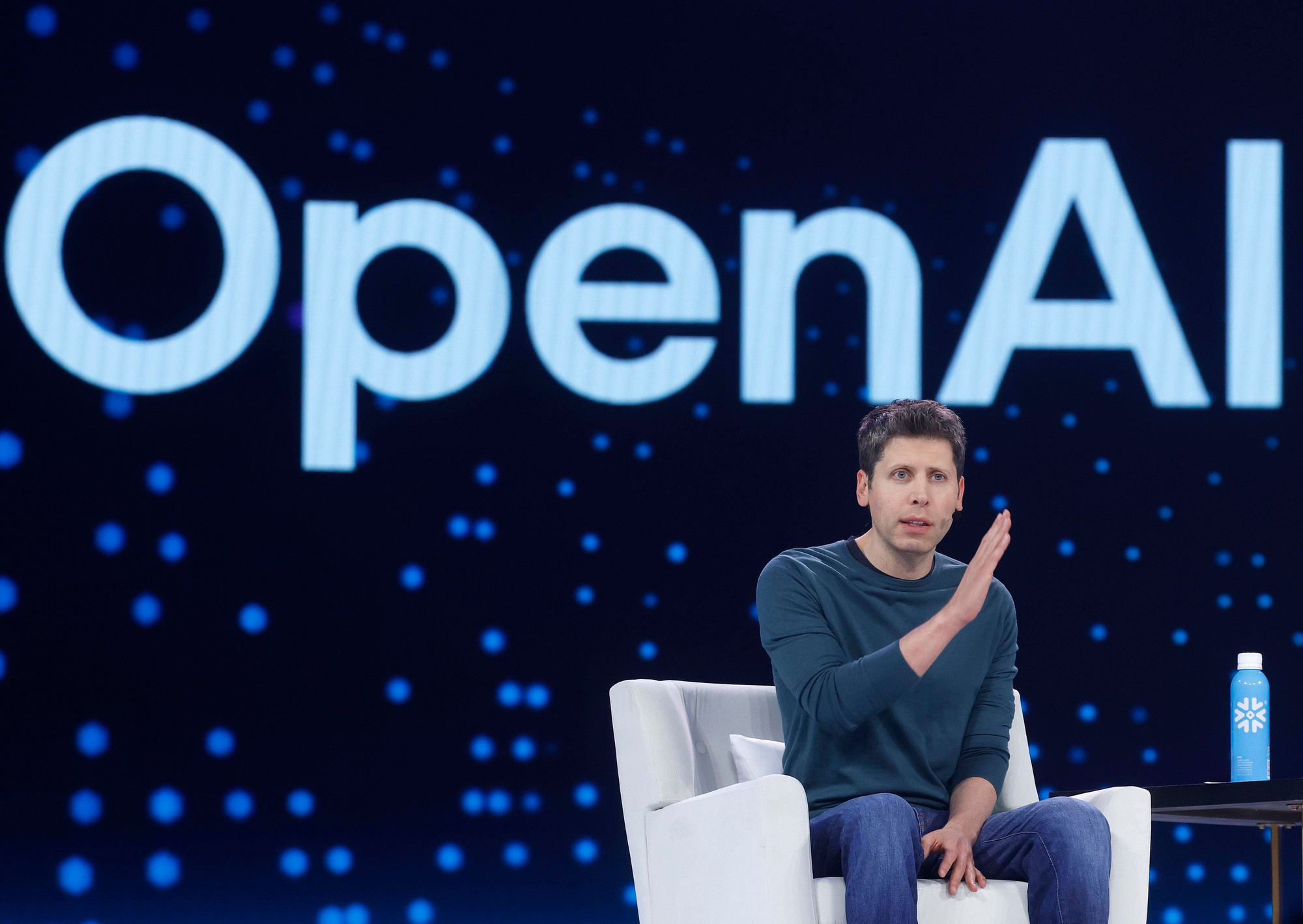
The news that OpenAI, the powerhouse behind innovations like ChatGPT and DALL-E, has acquired TBPN in what marks its first direct venture into the media sector, has sent significant ripples through both the tech and journalism industries. This is not just another acquisition; it's a strategic maneuver that many analysts are already calling a "seismic shift," capable of fundamentally redefining how information is produced, distributed, and consumed. The purchase of a podcast network like TBPN by a leading artificial intelligence company suggests a far more ambitious vision than mere portfolio expansion, pointing towards a deep integration of AI at the very heart of news content creation.
The Strategic Rationale Behind OpenAI's Media Investment
OpenAI's decision to acquire TBPN is far from coincidental. From a strategic perspective, this operation offers multiple benefits to the AI company. Firstly, it provides OpenAI direct access to a vast corpus of high-quality audio data and transcripts, essential for training and enhancing its language and voice generation models. This type of contextualized, conversational data is invaluable for refining AI's ability to understand human nuances, tones, and narrative structures. Secondly, the acquisition opens a new avenue for experimentation and the development of AI tools applied to content creation, ranging from automated script generation and summaries to the personalization of the auditory experience for each user. OpenAI is not just looking to improve its models but also to demonstrate their practical application in a dynamic sector like journalism.
The Podcast Format: An Ideal Testing Ground for AI
The choice of a podcast network like TBPN is particularly telling. The podcast format has experienced exponential growth in recent years, solidifying its position as an intimate and direct medium for news and analysis consumption. For OpenAI, podcasts represent an ideal laboratory to explore AI's capabilities in audio content production. This could include hyper-realistic voice synthesis, simultaneous translation for global audiences, personalization of news segments based on listener interests, or even the creation of "virtual journalists" capable of narrating stories with different styles and tones. The conversational and often long-form nature of podcasts also allows AI to analyze and replicate human interaction patterns in a way that other media formats might not permit as easily.
Revolutionizing News Production and Distribution
The integration of OpenAI's AI with TBPN's infrastructure has the potential to radically transform the journalism value chain. In the production phase, AI could assist journalists in research, analyzing large volumes of data, identifying trends, and drafting initial reports, freeing human professionals for higher-value tasks such as in-depth investigation, fact-checking, and critical analysis. In distribution, AI could optimize content delivery, personalizing news for each listener based on their preferences, listening history, and geographical location, creating a hyper-relevant and engaging news consumption experience. This could lead to increased efficiency, unprecedented content production at scale, and the ability to reach broader and more diverse audiences.
Ethical Implications and the Future of Human Journalism
However, this "seismic shift" is not without its challenges and ethical considerations. The increasing reliance on AI in news creation raises fundamental questions about authorship, originality, algorithmic bias, and the spread of misinformation. How will transparency regarding AI-generated content be ensured? What will be the role of human journalists in an ecosystem where AI can generate entire stories? It is likely that the future will see a symbiosis, where AI acts as a powerful tool that amplifies journalists' capabilities, allowing them to focus on ethics, deep investigation, and human connection, while AI handles repetitive and high-volume tasks. The key will be to find a balance that preserves the integrity and trust in journalism.
A New Horizon for Information
In summary, OpenAI's acquisition of TBPN is far more than a simple business transaction; it is a statement of intent. It signals the beginning of an era where artificial intelligence not only assists but actively integrates into the creation and distribution of media content. This move has the potential to democratize access to information, personalize the news experience to unprecedented levels, and transform the media economy. While the challenges are significant, the opportunity to innovate and redefine journalism for the 21st century is immense, marking a milestone that will undoubtedly be studied as a turning point in the convergence of technology and media.
Keep reading online — scan the code
https://go.tricuatro.com/JrGUM
© tricuatro.com
Article topics
Related articles

TikTok tests AI tool to protect creators from deepfakes
The video platform is rolling out an opt-in feature allowing users to verify their identity and report unauthorized AI-generated likenesses.

Apple Sues OpenAI Over Alleged Hardware Trade Secret Theft
The Cupertino giant accuses former key employees, including Tang Tan, of stealing confidential hardware information for OpenAI's benefit and its expansion into consumer hardware.

Anthropic Tackles AI's Toughest Questions for a Responsible Future
The company launches an initiative to understand public concerns and transparently address the challenges of artificial intelligence development.
Latest news
View all
Sweet Interstellar Discovery: Erythrulose Detected in the Milky Way
Scientists from the Spanish Astrobiology Center have for the first time identified a true sugar, erythrulose, in a gas and dust cloud near our galaxy's center. This finding suggests complex molecules can form before stars and planets are born.

Paramount and Warner Bros. Merger Halted by Judge Over Antitrust Concerns
A coalition of 12 states successfully petitioned Judge Araceli Martinez-Olguin to temporarily block the deal, citing fears of higher prices and reduced content.

MIT Chip Converts Invisible Infrared Light into Crucial Data
MIT researchers developed an innovative chip detecting methane and propane using mid-infrared light, with potential for millions of pixels and optical computing.
Comments (0)
No comments yet. Be the first!
Only registered readers can comment.