
Quantum Computing: High-Speed Internet Teleportation Achieved
Researchers successfully transmitted quantum information over conventional fiber optic internet, a significant step towards future secure communications.


A quantum leap for the future of the internet! Scientists at Northwestern University have achieved an unprecedented breakthrough: the first successful demonstration of quantum teleportation on a high-speed internet network. This achievement, published in the prestigious journal Optica, utilizes conventional fiber optic infrastructure, paving the way for a more secure and faster quantum internet.
The experiment involved sending quantum states through a fiber optic cable spanning over 30 kilometers, while the same network simultaneously carried normal internet traffic without interference. This milestone is crucial as it proves the feasibility of integrating quantum communication with existing telecommunications networks, bypassing the costly need to build entirely new infrastructure.
Quantum teleportation, far from science fiction, refers to the transfer of quantum states between entangled particles. This phenomenon links two particles so that any change in one instantaneously affects the other, regardless of distance. In quantum computing, this principle is applied to qubits, the fundamental units of quantum information that, unlike classical bits, can exist in multiple states simultaneously, enabling exponentially more powerful calculations.
The breakthrough achieved by Northwestern University represents concrete proof that the integration between traditional networks and quantum communication is technically possible.
One of the biggest hurdles in developing a quantum internet has been the fragility of quantum signals, which are easily disrupted by external interference, especially in today's dense fiber optic networks. The team, led by researcher Prem Kumar, overcame this challenge by meticulously studying photon dispersion. The key was to position light particles at a specific point in the spectrum, thereby minimizing interference with classical internet traffic. "We studied in detail how light disperses," explained Kumar, highlighting the precision required to keep quantum communication intact.
This experiment marks the first time a functional quantum teleportation has been achieved in an environment shared with high-speed conventional traffic. The implications are vast, particularly in the realm of cybersecurity. A quantum internet, by relying on quantum principles and photons rather than traditional codes, would be intrinsically more secure, as any eavesdropping attempt would automatically alter particle states, revealing the intrusion.
Beyond security, these quantum networks will enable the interconnection of quantum computers, significantly boosting their processing power to tackle problems currently considered intractable. Sectors such as finance, medicine, defense, artificial intelligence, and complex scientific simulations stand to benefit immensely from this new era of connectivity.
This achievement builds upon other significant advancements in the field, including the teleportation of quantum information between non-neighboring nodes in 2022 and a long-distance quantum teleportation by NASA and Fermilab scientists in 2020. However, Northwestern's demonstration is particularly relevant for proving the coexistence of quantum networks with current internet infrastructure.
Despite the excitement, experts caution that a widespread quantum internet is still some way off, facing challenges related to stability, cost, and scalability. Nevertheless, this breakthrough serves as tangible proof of the technical feasibility of integrating traditional networks with quantum communication, bringing us closer to a new generation of internet that is faster, more secure, and capable of supporting applications that today still seem futuristic.
Keep reading online — scan the code
https://go.tricuatro.com/kb9Ha
© tricuatro.com
Article topics
Related articles
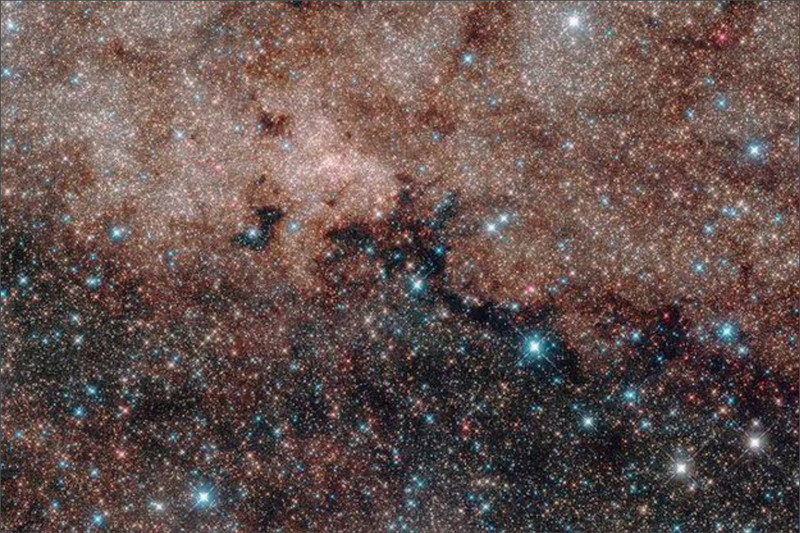
Sweet Interstellar Discovery: Erythrulose Detected in the Milky Way
Scientists from the Spanish Astrobiology Center have for the first time identified a true sugar, erythrulose, in a gas and dust cloud near our galaxy's center. This finding suggests complex molecules can form before stars and planets are born.
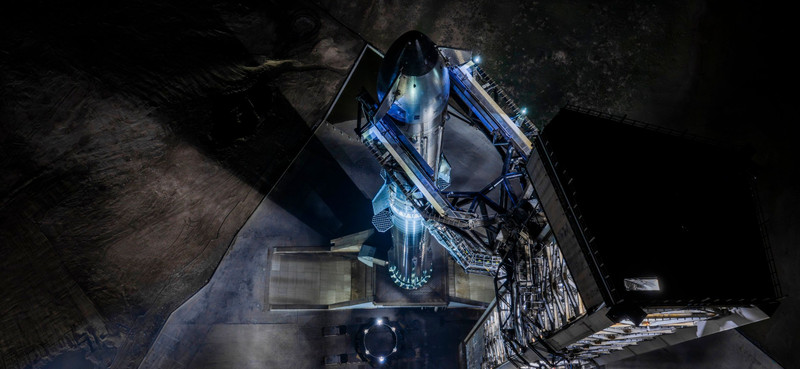
SpaceX Scrubs Starship Test Flight in South Texas
Computer systems detected an anomaly during the Super Heavy booster's engine startup sequence, forcing the mission's abort.

JAXA's RV-X Reusable Rocket Successfully Completes First Flight
Japan's space agency JAXA successfully tested its RV-X prototype, a critical step towards reducing costs and boosting competitiveness in the global space market.
Latest news
View all
Paramount and Warner Bros. Merger Halted by Judge Over Antitrust Concerns
A coalition of 12 states successfully petitioned Judge Araceli Martinez-Olguin to temporarily block the deal, citing fears of higher prices and reduced content.

MIT Chip Converts Invisible Infrared Light into Crucial Data
MIT researchers developed an innovative chip detecting methane and propane using mid-infrared light, with potential for millions of pixels and optical computing.

Assassin's Creed Black Flag Resynced Smashes 3 Million Sales, New Game Plus Announced
Ubisoft's successful re-release of the pirate classic continues to break records, confirming one of the most requested features from the gaming community.
Comments (0)
No comments yet. Be the first!
Only registered readers can comment.