
Source of Gas Clouds Feeding Sagittarius A* Identified
A new study shows that a massive binary star near Sagittarius A* is responsible for the gas clouds fueling the supermassive black hole.


The gas clouds surrounding the center of the Milky Way, which puzzled astronomers for years, now have a clear explanation. A massive binary star, known as IRS 16SW, located close to the supermassive black hole Sagittarius A*, acts as the source of these “clumps” of gas. These fragments flow steadily, feeding the black hole and sustaining its activity.
The research, led by the Max Planck Institute for Extraterrestrial Physics (MPE), presents a model explaining how matter travels from the dense stellar environment toward the galactic core. Published in Astronomy & Astrophysics, the findings suggest that periodic influxes of gas clouds, roughly every ten years, are enough to keep Sagittarius A* active.
The team used unprecedented observations with the SINFONI and ERIS spectrographs, which enable high-resolution infrared spectroscopy in an extremely dense and dynamic environment. These tools allowed detecting and analyzing the gas clouds near the black hole, shedding light on how it is fed.
The central region of the Milky Way hosts a high concentration of stars, gas, and dust, all under intense gravitational forces. This unique environment offers a natural laboratory to study the physical processes governing matter near a black hole and how it accretes material from its surroundings.
Over the past two decades, astronomers have detected several compact gas clouds near Sagittarius A, such as G2, an ionized gas cloud several times the mass of Earth. G2 moves along an elongated orbit and leaves a trail called G2t, identified in previous studies. Retroactive data also revealed similar objects like G1, following comparable trajectories.
These discoveries led to the hypothesis that G1, G2, and G2t form an interconnected system, where denser clusters emerge from fluctuations in a larger gaseous flow. The brightness of these objects, which depends on the square of their density, supports the idea of a common source. Recent observations also detected a third compact core, resulting from condensations of residual gas from G2, strengthening the theory that these clusters are part of a dynamic process at the galactic center.
Keep reading online — scan the code
https://go.tricuatro.com/S3xdQ
© tricuatro.com
Article topics
Related articles
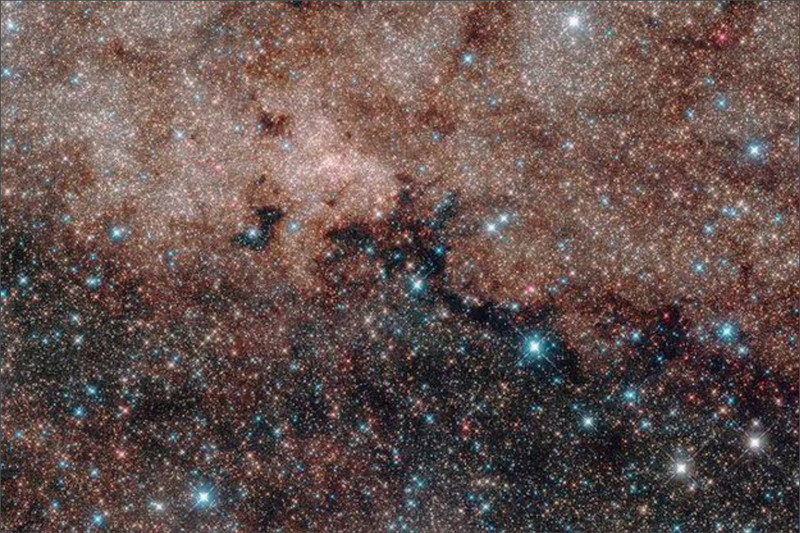
Sweet Interstellar Discovery: Erythrulose Detected in the Milky Way
Scientists from the Spanish Astrobiology Center have for the first time identified a true sugar, erythrulose, in a gas and dust cloud near our galaxy's center. This finding suggests complex molecules can form before stars and planets are born.
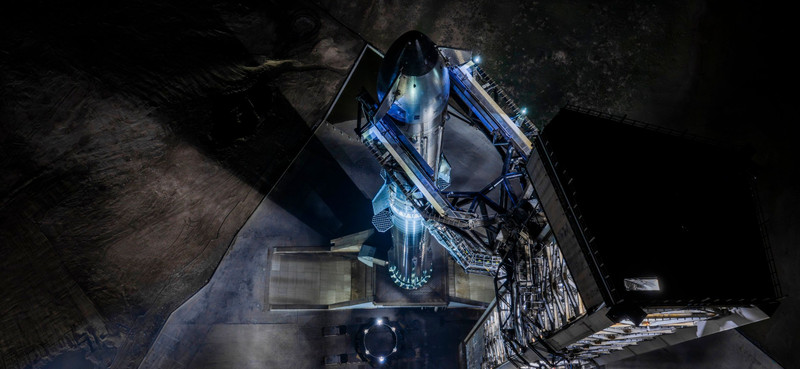
SpaceX Scrubs Starship Test Flight in South Texas
Computer systems detected an anomaly during the Super Heavy booster's engine startup sequence, forcing the mission's abort.
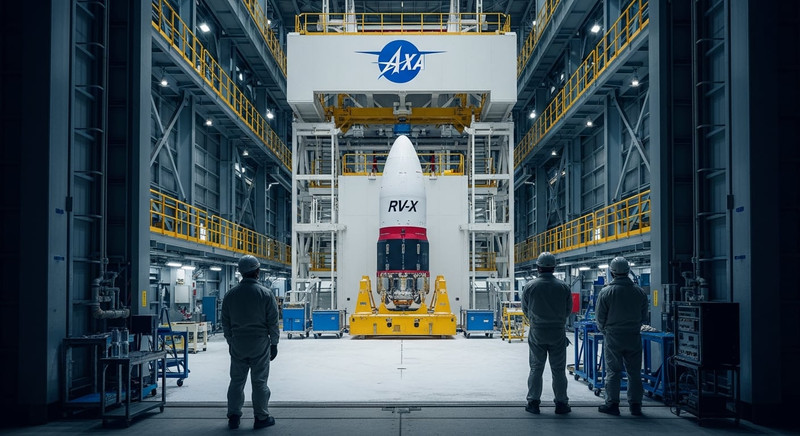
JAXA's RV-X Reusable Rocket Successfully Completes First Flight
Japan's space agency JAXA successfully tested its RV-X prototype, a critical step towards reducing costs and boosting competitiveness in the global space market.
Latest news
View all
Paramount and Warner Bros. Merger Halted by Judge Over Antitrust Concerns
A coalition of 12 states successfully petitioned Judge Araceli Martinez-Olguin to temporarily block the deal, citing fears of higher prices and reduced content.
MIT Chip Converts Invisible Infrared Light into Crucial Data
MIT researchers developed an innovative chip detecting methane and propane using mid-infrared light, with potential for millions of pixels and optical computing.

Assassin's Creed Black Flag Resynced Smashes 3 Million Sales, New Game Plus Announced
Ubisoft's successful re-release of the pirate classic continues to break records, confirming one of the most requested features from the gaming community.
Comments (0)
No comments yet. Be the first!
Only registered readers can comment.