
Stargate: Sam Altman's AI Megadata Center Begins Construction in Texas
The ambitious Stargate project, led by OpenAI's Sam Altman alongside SoftBank and Oracle, has commenced construction in Abilene, Texas. With a staggering $500 billion investment, this artificial intelligence data center is poised to become one of the world's largest, designed to meet the surging demand for AI processing power.

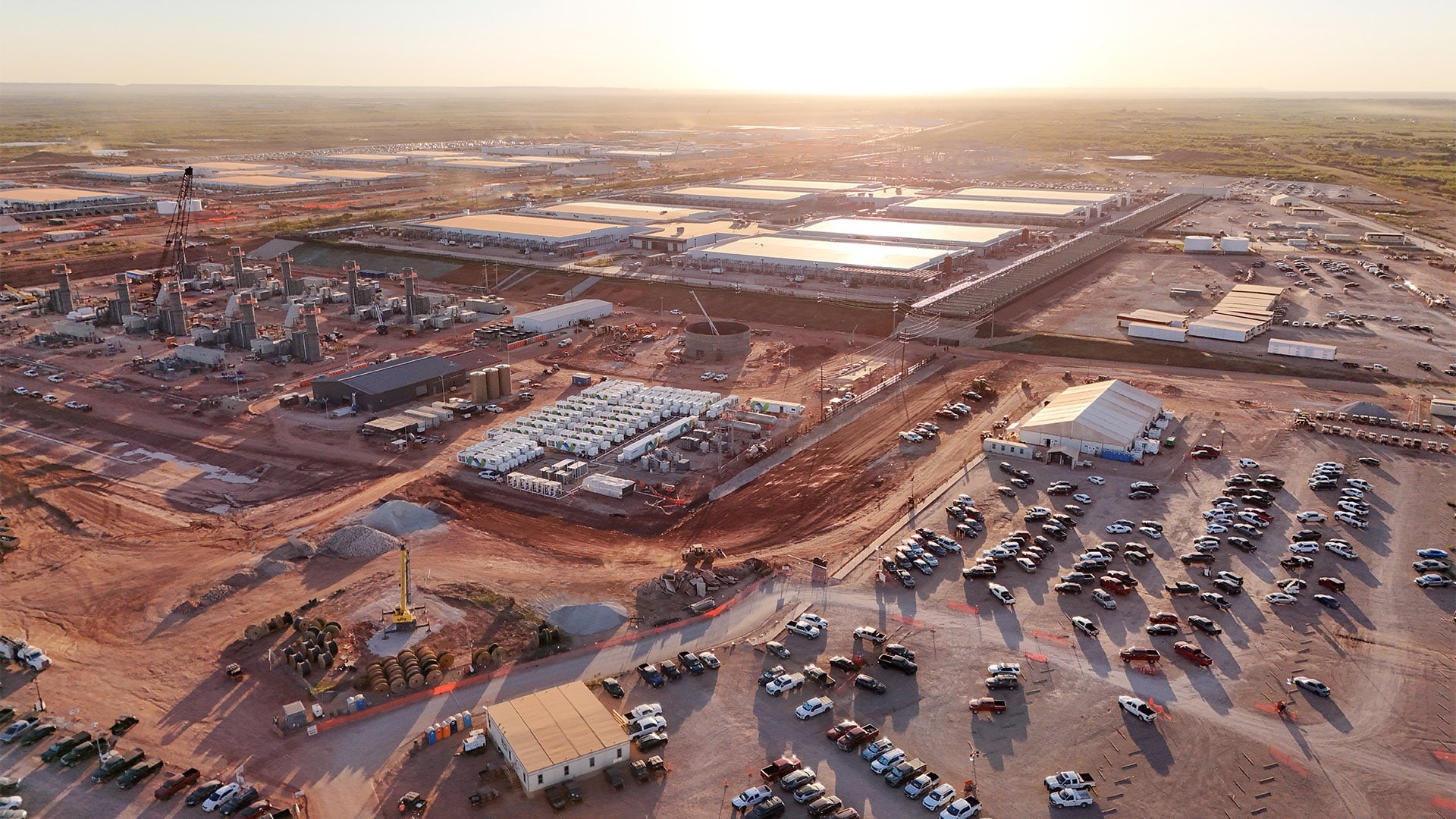
The promise of an unprecedented artificial intelligence data center has begun to take concrete form in Abilene, Texas. Sam Altman, CEO of OpenAI, has launched the Stargate project, a monumental initiative poised to redefine the infrastructure required for the future of AI. In a recent interview with Bloomberg's Emily Chang, Altman unveiled the details of this collaboration with SoftBank and Oracle, which envisions the construction of eight buildings with an investment nearing $500 billion. The primary goal of this consortium is to anticipate and respond to the exponential growth of artificial intelligence, providing the massive processing capacity that current and future demand necessitates.
The Abilene Giant: Dimensions and Purpose
Stargate is not merely a data center; it is a statement about the scale of ambition in the AI field. The projected infrastructure in Abilene will include eight buildings, each designed to house clusters capable of accommodating up to 400,000 processing chips. This massive configuration will result in a total power output exceeding 1.2 gigawatts, a figure that illustrates the project's magnitude by being equivalent to the energy consumption of a medium-sized city. Altman explained to Bloomberg that Stargate's fundamental purpose is to provide the computational capacity needed to meet the explosive demand for AI, thereby accelerating scientific and technological development with a direct and profound impact on the global economy and daily life.
Technological Innovation and Energy Sustainability
The technological dimension of Stargate is as impressive as its scale. The project will employ state-of-the-art Graphics Processing Units (GPUs), which are essential for intensive AI workloads. A crucial and distinctive aspect is its focus on cooling efficiency. Unlike traditional architectures that consume vast volumes of water daily, Stargate will utilize closed-loop systems that require approximately one million gallons of water only for initial operations. "We fill it once and that's it," Altman noted, highlighting the sustainability of this model. The construction pace has been described as "ridiculous" by those involved, with some 2,200 people from Abilene and seven other states participating, working tirelessly since construction began in June 2024.
The choice of Abilene, Texas, is no coincidence. The region was strategically selected for its abundance of clean, low-cost energy, primarily wind power—a vital resource for sustaining the operation of these high-energy-demand data centers. Stargate will prioritize the use of wind energy and efficient cooling systems to minimize its environmental impact. However, Altman also addressed the inherent energy challenges of a project of this magnitude. He acknowledged that "there's no way the energy used will be entirely carbon-free by 2030; it's impossible," underscoring the need to explore and develop new energy technologies, such as modular reactors and geothermal power, to meet AI's growing energy demands sustainably in the long term.
Sam Altman's Vision and Future Challenges
During the interview, Altman emphasized that Stargate is a direct response to the need to drastically expand processing capacity to cope with the escalating demand for AI. "If we had more processing capacity, we could better respond to the explosive demand for AI," he stated. His personal vision extends beyond mere capacity, projecting that this infrastructure will offer tools that enhance creativity and productivity to unprecedented levels. "What excites me most personally is AI for scientific discovery," he affirmed, anticipating significant breakthroughs within one or two years thanks to the computational power Stargate will provide. This infrastructure will not only drive the development of more complex AI models but also open new frontiers in research and innovation.
In summary, Stargate represents an unprecedented investment in artificial intelligence infrastructure, a testament to its proponents' belief in the transformative potential of this technology. By addressing both the massive scale of processing and the energy and sustainability challenges, the project in Abilene aims not only to meet current demand but also to lay the groundwork for the next era of AI-driven discoveries. It is a bold bet on the future, promising to accelerate innovation and redefine the boundaries of what is possible in the technological realm.
Keep reading online — scan the code
https://go.tricuatro.com/tFmgX
© tricuatro.com
Related articles

TikTok tests AI tool to protect creators from deepfakes
The video platform is rolling out an opt-in feature allowing users to verify their identity and report unauthorized AI-generated likenesses.

Apple Sues OpenAI Over Alleged Hardware Trade Secret Theft
The Cupertino giant accuses former key employees, including Tang Tan, of stealing confidential hardware information for OpenAI's benefit and its expansion into consumer hardware.

Anthropic Tackles AI's Toughest Questions for a Responsible Future
The company launches an initiative to understand public concerns and transparently address the challenges of artificial intelligence development.
Latest news
View all
Sweet Interstellar Discovery: Erythrulose Detected in the Milky Way
Scientists from the Spanish Astrobiology Center have for the first time identified a true sugar, erythrulose, in a gas and dust cloud near our galaxy's center. This finding suggests complex molecules can form before stars and planets are born.

Paramount and Warner Bros. Merger Halted by Judge Over Antitrust Concerns
A coalition of 12 states successfully petitioned Judge Araceli Martinez-Olguin to temporarily block the deal, citing fears of higher prices and reduced content.

MIT Chip Converts Invisible Infrared Light into Crucial Data
MIT researchers developed an innovative chip detecting methane and propane using mid-infrared light, with potential for millions of pixels and optical computing.
Comments (0)
No comments yet. Be the first!
Only registered readers can comment.