
Talent Exodus at SpaceXAI Post-xAI Merger: A Setback for Elon Musk?
Over 50 key researchers and engineers have departed the merged company, raising concerns about the future of Elon Musk's ambitious space-based AI projects.

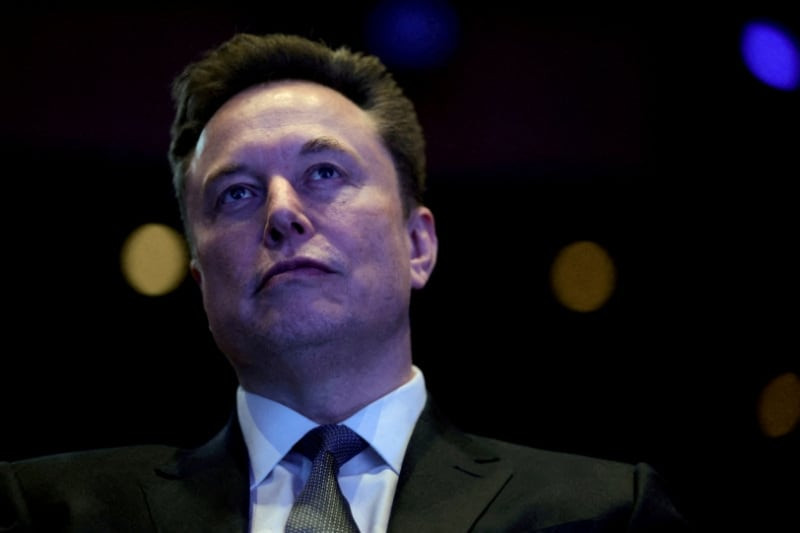
The recent merger of SpaceX and xAI, now operating as SpaceXAI under Elon Musk's leadership, is facing an unexpected challenge: a significant talent exodus. Since February, more than 50 researchers and engineers have left the company, including key figures in areas like coding, world models, and Grok's voice capabilities.
This departure of specialized personnel represents a considerable setback for Musk's ambitious plans to develop orbital data centers and a computational cloud in space. The loss of critical talent could slow down or even compromise the development of advanced artificial intelligence technologies.
Rival companies in the competitive AI field, such as Meta and Thinking Machine Labs, have already begun recruiting these former employees. At least 11 members of xAI have joined Meta, while seven have opted for Thinking Machine Labs, led by Mira Murati. This situation highlights the high demand for AI experts and the intense competition for talent.
The departure of Juntang Zhuang, the leader of the pre-training team, has intensified concerns about SpaceXAI's commitment to building cutting-edge AI models. Pre-training is a fundamental stage in developing these technologies, and its weakening casts doubt on the company's ability to innovate.
The departure of the team leader, Juntang Zhuang, has increased concerns about the future of AI projects.
The work culture, often described as "extreme" under Elon Musk's direction, appears to be a significant factor in these departures. Internal sources indicate that unrealistic deadlines for model training led to shortcuts in Grok's development, causing frustration among the team.
However, not all departures are solely due to work pressure. Some former employees saw an opportunity to sell acquired shares, especially with the expectation of an upcoming company IPO. Immediate financial benefit became a priority for some.
Musk's vision for SpaceXAI is bold: to move artificial intelligence infrastructure off-world. The goal is to create orbital data centers that leverage constant solar energy, overcoming the power and cooling limitations of terrestrial data centers. This would allow AI to scale to a "superintelligence" without relying on the planet's electrical grid.
The vertical integration of SpaceX and xAI aims to control the entire process, from Starship rocket launches to server operations and Starlink satellite connectivity. This model seeks to reduce costs and create a self-sufficient space infrastructure for advanced AI development, marking a shift towards an "orbital computational cloud.".
Keep reading online — scan the code
https://go.tricuatro.com/LhTIJ
© tricuatro.com
Related articles

TikTok tests AI tool to protect creators from deepfakes
The video platform is rolling out an opt-in feature allowing users to verify their identity and report unauthorized AI-generated likenesses.

Apple Sues OpenAI Over Alleged Hardware Trade Secret Theft
The Cupertino giant accuses former key employees, including Tang Tan, of stealing confidential hardware information for OpenAI's benefit and its expansion into consumer hardware.

Anthropic Tackles AI's Toughest Questions for a Responsible Future
The company launches an initiative to understand public concerns and transparently address the challenges of artificial intelligence development.
Latest news
View all
Sweet Interstellar Discovery: Erythrulose Detected in the Milky Way
Scientists from the Spanish Astrobiology Center have for the first time identified a true sugar, erythrulose, in a gas and dust cloud near our galaxy's center. This finding suggests complex molecules can form before stars and planets are born.

Paramount and Warner Bros. Merger Halted by Judge Over Antitrust Concerns
A coalition of 12 states successfully petitioned Judge Araceli Martinez-Olguin to temporarily block the deal, citing fears of higher prices and reduced content.

MIT Chip Converts Invisible Infrared Light into Crucial Data
MIT researchers developed an innovative chip detecting methane and propane using mid-infrared light, with potential for millions of pixels and optical computing.
Comments (0)
No comments yet. Be the first!
Only registered readers can comment.