
The Costly Dream of Space-Based AI Infrastructure
Jensen Huang's vision of AI data centers in space is bold, but physics, cost, and power realities keep this infrastructure firmly grounded on Earth.


Jensen Huang's vision of orbiting AI data centers is undeniably bold and futuristic. In a world where artificial intelligence is expanding at an unprecedented pace, the idea of extending its infrastructure into space might seem like a logical progression to some. However, this ambitious proposal collides head-on with the relentless realities of physics, exorbitant costs, and severe power limitations, firmly keeping the future of large-scale AI infrastructure grounded on Earth for the foreseeable future.
The Allure of a Space-Based Vision
What drives such a grand vision? The promise of "unlimited expansion" for physical space, access to unique data (such as satellite imagery or astronomical data processed in situ), or even the pursuit of resilience against terrestrial disasters, could be among the perceived benefits. The notion of a global AI network with reduced latency for certain applications or the ability to process information at the source, far from the constraints of ground-based infrastructure, fuels the imagination of innovators. It stands as a testament to the human spirit of pushing boundaries, even when those boundaries appear insurmountable.
The Unyielding Barriers of Space Physics
Space is an inherently hostile environment for complex electronics. Cosmic radiation and solar particles can degrade or damage silicon components, necessitating expensive and heavy shielding, as well as redundant systems. The vacuum of space presents a monumental thermal challenge: without air for convection, dissipating the immense heat generated by high-performance AI chips requires extremely sophisticated active cooling systems, such as radiators and pumps, which are bulky, heavy, and power-intensive. Furthermore, the sheer act of launching the mass of a data center into space is prohibitively expensive, and in-orbit maintenance or repair is virtually impossible, demanding extreme reliability and a prolonged operational lifespan without human intervention.
Astronomical Costs and the Power Conundrum
Beyond physics, economics present an overwhelming hurdle. Launch costs per kilogram, though decreasing, remain prohibitive for the scale of an entire data center. Every component must be "space-rated," meaning it is designed and tested to withstand launch vibrations, radiation, and extreme temperatures, multiplying its cost compared to its terrestrial counterparts. Power generation is another critical challenge. AI data centers consume gigawatts of power. In space, this translates to massive solar arrays and energy storage systems (batteries) that add significant weight, complexity, and potential points of failure, all while needing to operate efficiently for years without significant degradation.
Earth's Enduring Advantage and AI's Orbital Future
In stark contrast, Earth offers an established infrastructure: robust power grids, efficient cooling systems (air, water), easy access for maintenance and upgrades, and a mature supply chain for hardware. Terrestrial data centers can scale far more economically and rapidly. While Huang's vision for massive space-based data centers is a distant one, it doesn't mean AI has no place in orbit. "Edge computing" on satellites, where small AI processors perform specific tasks (like real-time image analysis) before sending data to Earth, is already a reality. These specialized applications represent a more realistic near-term step than full-scale AI infrastructure.
Jensen Huang's audacious proposal invites us to dream of a future where artificial intelligence transcends terrestrial boundaries. However, for now, the fundamental laws of physics, the economics of space, and the massive power demands of modern AI act as an unyielding anchor. While innovation in space continues, and AI will play a crucial role in future missions, the core infrastructure driving the AI revolution will, by necessity and efficiency, remain firmly rooted on our planet, leveraging its resources and relative hospitality.
Keep reading online — scan the code
https://go.tricuatro.com/0aT4x
© tricuatro.com
Related articles

TikTok tests AI tool to protect creators from deepfakes
The video platform is rolling out an opt-in feature allowing users to verify their identity and report unauthorized AI-generated likenesses.

Apple Sues OpenAI Over Alleged Hardware Trade Secret Theft
The Cupertino giant accuses former key employees, including Tang Tan, of stealing confidential hardware information for OpenAI's benefit and its expansion into consumer hardware.

Anthropic Tackles AI's Toughest Questions for a Responsible Future
The company launches an initiative to understand public concerns and transparently address the challenges of artificial intelligence development.
Latest news
View all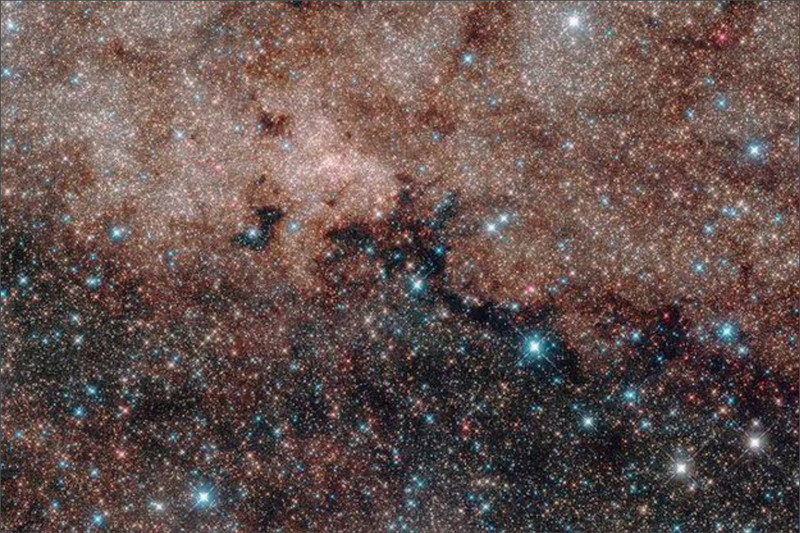
Sweet Interstellar Discovery: Erythrulose Detected in the Milky Way
Scientists from the Spanish Astrobiology Center have for the first time identified a true sugar, erythrulose, in a gas and dust cloud near our galaxy's center. This finding suggests complex molecules can form before stars and planets are born.

Paramount and Warner Bros. Merger Halted by Judge Over Antitrust Concerns
A coalition of 12 states successfully petitioned Judge Araceli Martinez-Olguin to temporarily block the deal, citing fears of higher prices and reduced content.
MIT Chip Converts Invisible Infrared Light into Crucial Data
MIT researchers developed an innovative chip detecting methane and propane using mid-infrared light, with potential for millions of pixels and optical computing.
Comments (0)
No comments yet. Be the first!
Only registered readers can comment.