
How flowering plants survived the asteroid that wiped out the dinosaurs
A study led by Belgian scientists uncovers how some plant species endured the mass extinction 66 million years ago.

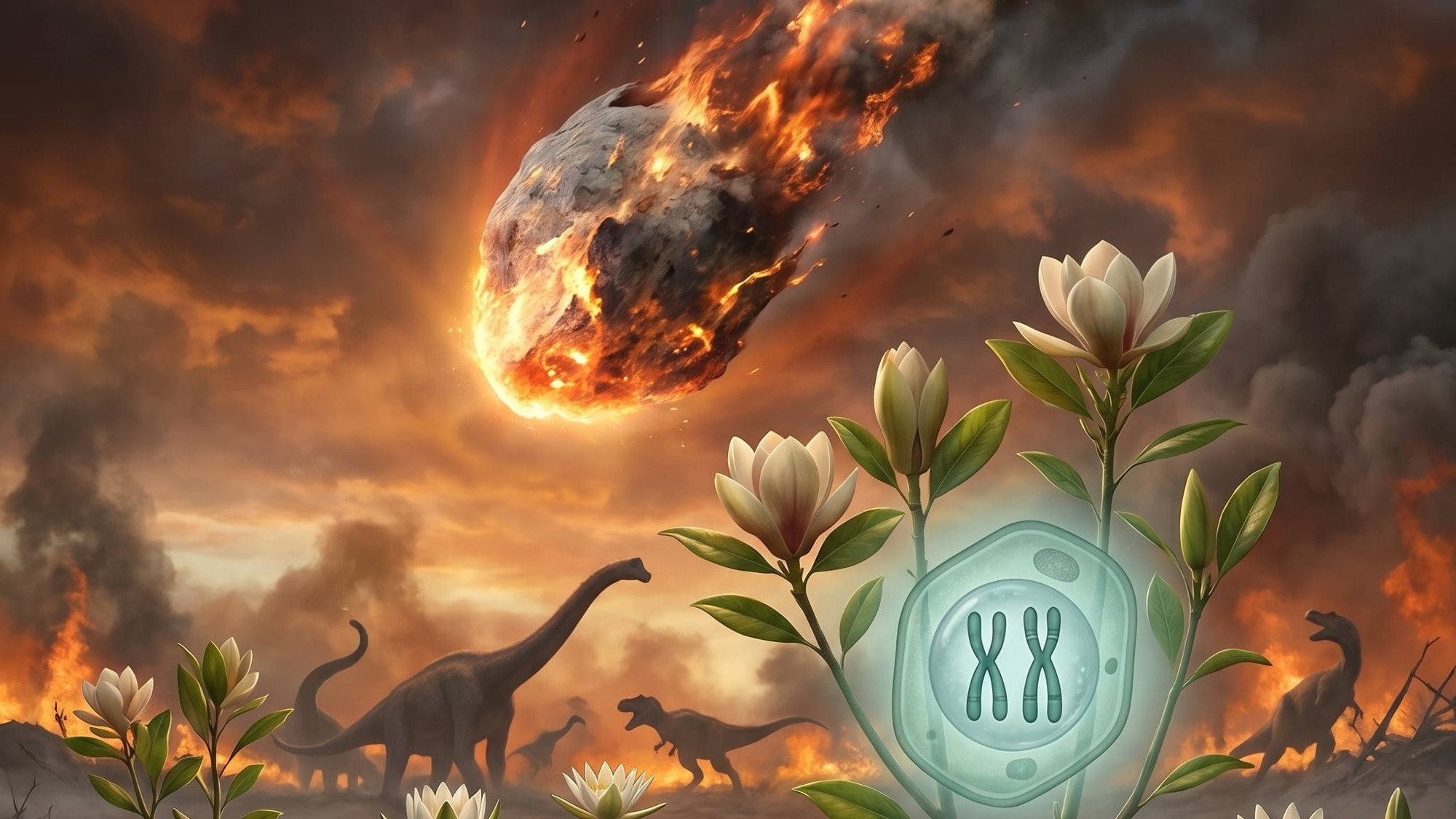
Sixty-six million years ago, an asteroid the size of Everest struck Earth, causing the extinction of non-avian dinosaurs. Yet, many flowering plants survived that catastrophic event. Researchers from the University of Ghent, in Belgium, published in Cell that these plants endured thanks to a complete duplication of their genome, known as polyploidy.
The team analyzed the genomes of 470 flowering plant species and identified 132 ancient events of whole-genome duplication. They dated these events with the help of 44 fossilized plants, showing they coincided with major environmental crises.
Many of these duplication events did not happen randomly but repeatedly aligned with Earth's most chaotic periods.
Having double the number of genes, which might seem disadvantageous, actually provided resilience during environmental stress. Plants with duplicated genomes showed higher tolerance to heat, drought, and other stresses.
The researchers explained that these duplications occurred at specific times, such as the Cretaceous-Paleogene extinction, oceanic anoxia episodes, and the Paleocene-Eocene Thermal Maximum about 55.8 million years ago.
The PETM is especially relevant because during that period, global temperatures rose between 5 and 8 °C in just 100,000 years, a rate comparable to current climate change. However, scientists warn that today's warming is much faster.
Yves Van de Peer, one of the study's authors, stated that genome duplication can help plants cope with extreme conditions, but the current rapid climate change exceeds historical rates.
The analysis also answered an old biological question: why do modern plant genomes show so few traces of past polyploidy? The answer is that only events occurring during crises managed to become fixed and persist.
Complete data from the study are available on the AngioWGD platform, developed by Ghent University, where researchers can explore the 132 duplication events across the 470 species studied.
Keep reading online — scan the code
https://go.tricuatro.com/Sffho
© tricuatro.com
Article topics
Related articles
Sweet Interstellar Discovery: Erythrulose Detected in the Milky Way
Scientists from the Spanish Astrobiology Center have for the first time identified a true sugar, erythrulose, in a gas and dust cloud near our galaxy's center. This finding suggests complex molecules can form before stars and planets are born.

SpaceX Scrubs Starship Test Flight in South Texas
Computer systems detected an anomaly during the Super Heavy booster's engine startup sequence, forcing the mission's abort.

JAXA's RV-X Reusable Rocket Successfully Completes First Flight
Japan's space agency JAXA successfully tested its RV-X prototype, a critical step towards reducing costs and boosting competitiveness in the global space market.
Latest news
View all
Paramount and Warner Bros. Merger Halted by Judge Over Antitrust Concerns
A coalition of 12 states successfully petitioned Judge Araceli Martinez-Olguin to temporarily block the deal, citing fears of higher prices and reduced content.

MIT Chip Converts Invisible Infrared Light into Crucial Data
MIT researchers developed an innovative chip detecting methane and propane using mid-infrared light, with potential for millions of pixels and optical computing.

Assassin's Creed Black Flag Resynced Smashes 3 Million Sales, New Game Plus Announced
Ubisoft's successful re-release of the pirate classic continues to break records, confirming one of the most requested features from the gaming community.
Comments (0)
No comments yet. Be the first!
Only registered readers can comment.