
Interstellar Comet 3I/ATLAS Shows Record Levels of Heavy Water
The interstellar comet 3I/ATLAS passing through our Solar System exhibits a much higher amount of heavy water than local comets, revealing its cold, distinct origin.

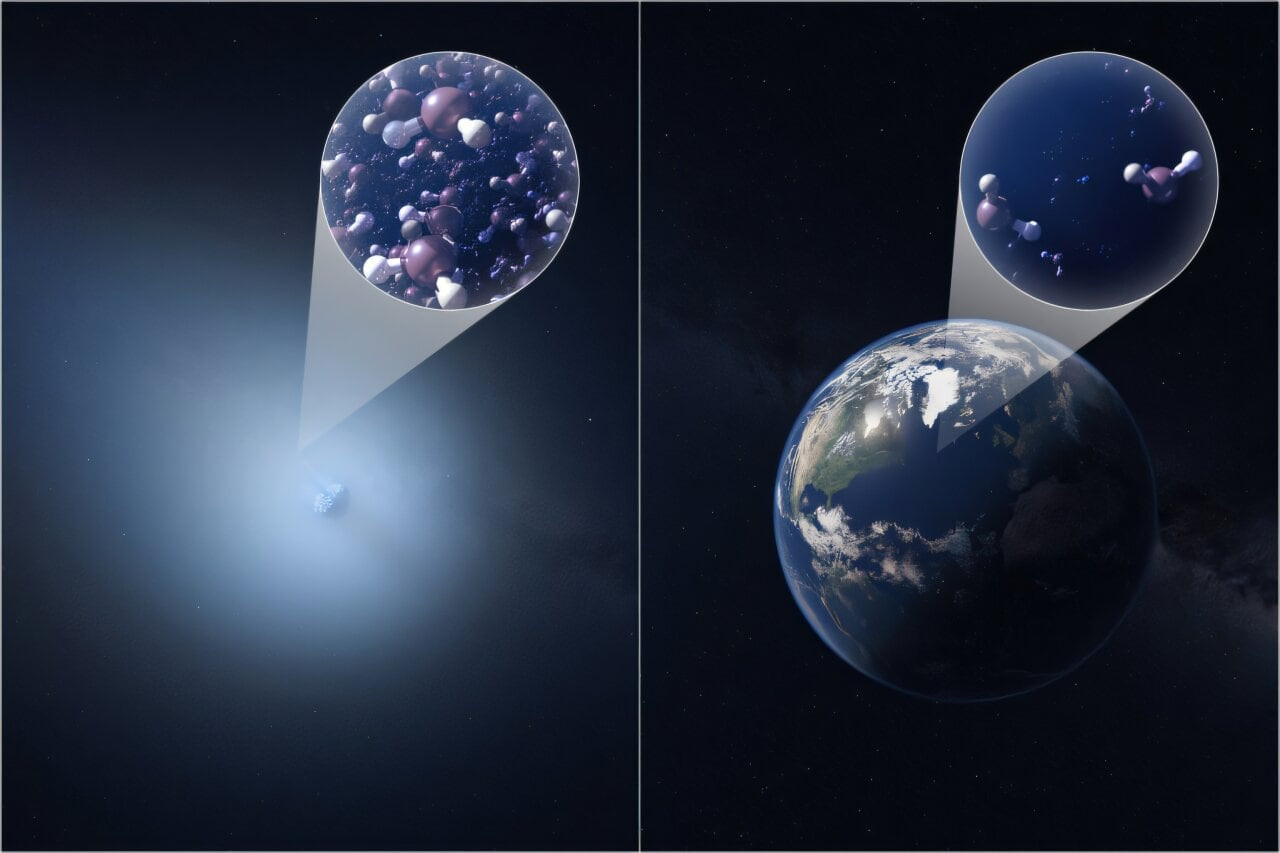
The interstellar comet 3I/ATLAS, which crossed our Solar System, surprised scientists with an unprecedented composition. Observations with the ALMA radio telescope detected a quantity of heavy water (HDO) more than 30 times higher than any solar system comet. Published in Nature Astronomy, this finding offers clues about the environment where this object formed, very different from our cosmic neighborhood.
Led by Luis E. Salazar Manzano and Professor Teresa Paneque-Carreño at the University of Michigan, the team analyzed the comet just six days after its closest approach to the Sun. “Our results show that the conditions that formed our solar system differ greatly from those that shaped other systems in the galaxy,” explained Salazar Manzano.
The key discovery was the ratio between regular water (H2O) and heavy water (HDO). Solar system comets typically have only one HDO molecule per 10,000 H2O molecules, making detection difficult. However, ALMA’s sensitivity allowed precise measurement of this ratio in 3I/ATLAS, revealing it exceeds the typical values near the Sun by over 30 times and surpasses Earth's ocean levels by more than 40 times.
The heavy water in this comet indicates its formation environment was much colder than that of the Solar System.
Heavy water differs from regular water because one hydrogen atom is replaced by deuterium, an isotope with an extra neutron. The amount of HDO in comets and planets is closely linked to the temperatures and radiation conditions during their formation. The processes that promote deuterated water require environments colder than 30 Kelvin (−243.15 °C).
This extremely low temperature suggests that the gas cloud that formed the star and planets of 3I/ATLAS's system was likely very cold and different from the environment that created our solar system. “We now know that the gas cloud that formed this interstellar system was much colder and distinct,” stated Salazar Manzano.
The breakthrough was possible thanks to ALMA’s ability to observe during critical moments, right after the comet’s passage behind the Sun, when other instruments cannot point accurately. This sensitivity enabled detection of this unique composition at a moment when most tools are unable to observe.
Keep reading online — scan the code
https://go.tricuatro.com/vYXRE
© tricuatro.com
Article topics
Related articles
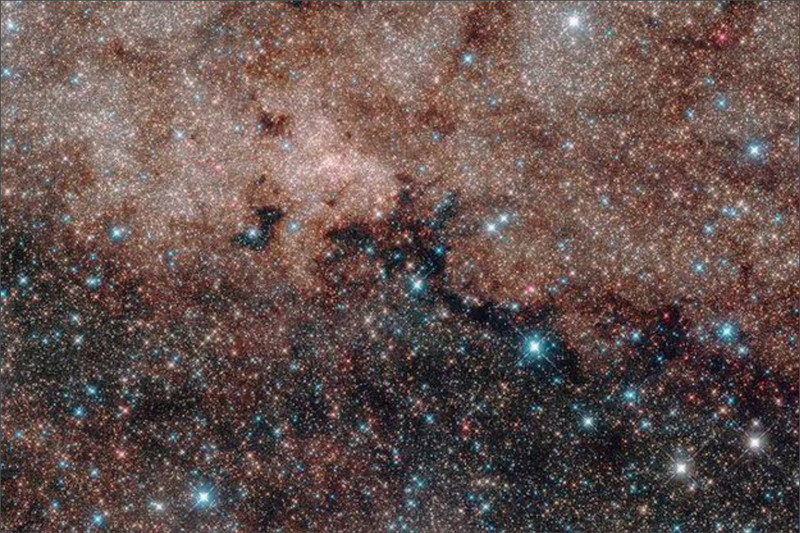
Sweet Interstellar Discovery: Erythrulose Detected in the Milky Way
Scientists from the Spanish Astrobiology Center have for the first time identified a true sugar, erythrulose, in a gas and dust cloud near our galaxy's center. This finding suggests complex molecules can form before stars and planets are born.
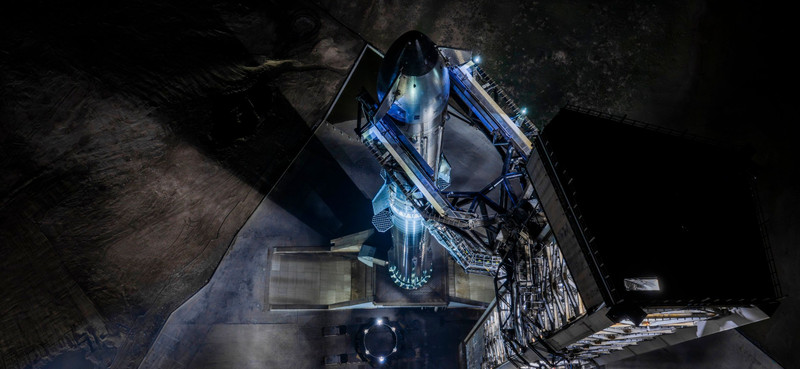
SpaceX Scrubs Starship Test Flight in South Texas
Computer systems detected an anomaly during the Super Heavy booster's engine startup sequence, forcing the mission's abort.
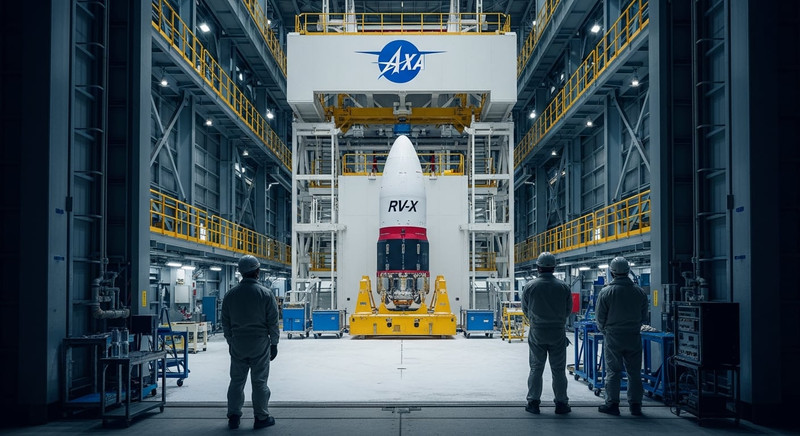
JAXA's RV-X Reusable Rocket Successfully Completes First Flight
Japan's space agency JAXA successfully tested its RV-X prototype, a critical step towards reducing costs and boosting competitiveness in the global space market.
Latest news
View all
Paramount and Warner Bros. Merger Halted by Judge Over Antitrust Concerns
A coalition of 12 states successfully petitioned Judge Araceli Martinez-Olguin to temporarily block the deal, citing fears of higher prices and reduced content.

MIT Chip Converts Invisible Infrared Light into Crucial Data
MIT researchers developed an innovative chip detecting methane and propane using mid-infrared light, with potential for millions of pixels and optical computing.

Assassin's Creed Black Flag Resynced Smashes 3 Million Sales, New Game Plus Announced
Ubisoft's successful re-release of the pirate classic continues to break records, confirming one of the most requested features from the gaming community.
Comments (0)
No comments yet. Be the first!
Only registered readers can comment.