
MIT Engineers Develop Tiny Ingestible Pill for Internal Temperature
MIT engineers created a blueberry-sized ingestible thermometer, capable of continuously and precisely monitoring core body temperature from the gastrointestinal tract.


Detecting variations as minute as 0.01 degrees Celsius, engineers at the Massachusetts Institute of Technology (MIT) have developed an ingestible pill set to revolutionize body temperature measurement. This tiny device, described by its creators as "blueberry-sized," continuously transmits core body temperature updates directly from the gastrointestinal tract, addressing limitations of traditional thermometers.
The device's extreme miniaturization is one of its most striking features. Measuring just 6 millimeters in diameter and 4 millimeters in height, this sphere is significantly smaller than existing ingestible sensors, which are typically the size of a multivitamin. This reduction in size is critical for patient safety, drastically lowering the risk of intestinal obstructions.
"We want something so small that the risk of any blockage is completely mitigated," explained Giovanni Traverso, an MIT professor of mechanical engineering and a gastroenterologist at Brigham and Women’s Hospital.
Achieving this record-breaking size required the MIT team to completely redesign the internal components. They developed a custom circuit on a silicon chip measuring just 1 square millimeter. Powering this miniature system is a 1.55-volt button battery, similar to those found in watches, yet it boasts an incredibly low energy consumption of only 10 nanowatts.
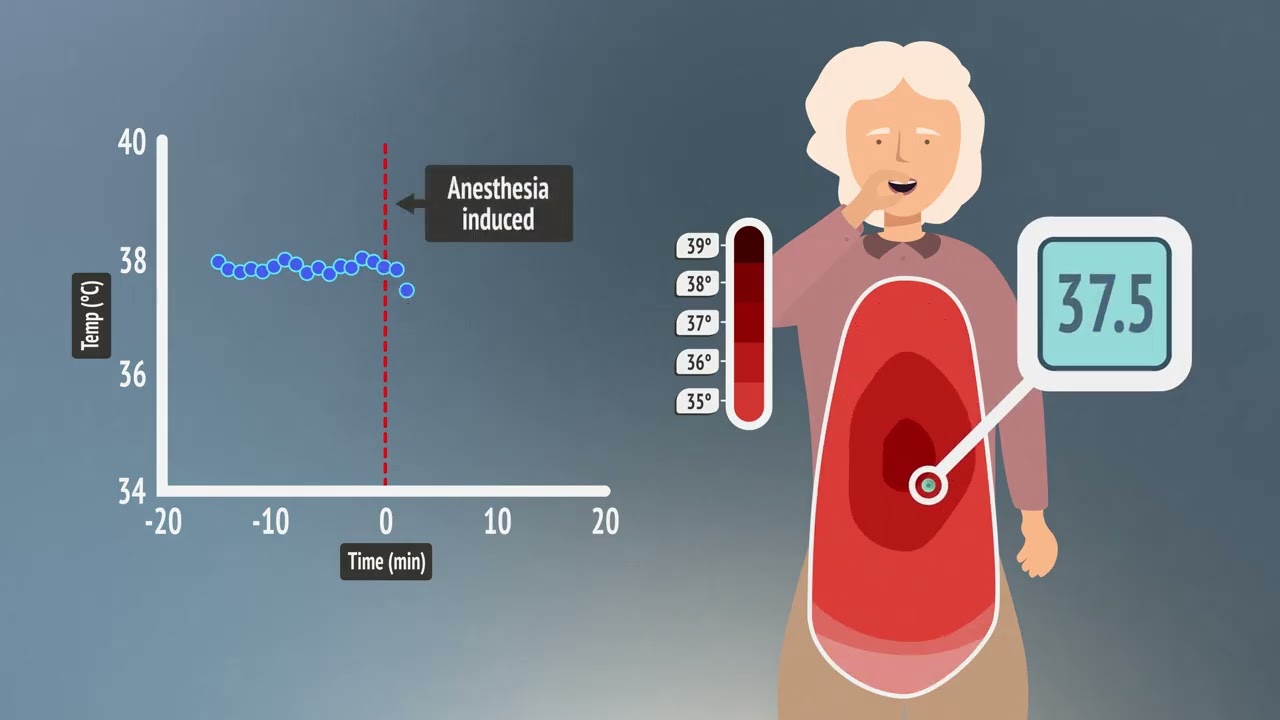
The key to its efficient operation and communication lies in a clever "backscattering" strategy. Instead of the sensor expending energy to send powerful signals, an external antenna positioned near the patient emits radio waves. The sensor then modulates these waves, reflecting them back with the thermal information, enabling a temperature reading every second.
The potential applications for this micro-thermometer are extensive, particularly in clinical settings. MIT researchers envision its use in immunocompromised patients, such as those undergoing chemotherapy, for early detection of infections. It could also prove invaluable for individuals under anesthesia, who often lose the ability to regulate their body temperature and face a risk of hypothermia.
Beyond the hospital, the device's utility expands significantly. The sensor could identify subtle thermal changes linked to ovulation, providing a precise tool for fertility monitoring. Furthermore, it could help manage thermal stress in extreme conditions, like during a 2026 World Cup match, or offer continuous, non-invasive fever monitoring for children.
The device has already undergone successful testing in animals, demonstrating accuracy both at rest and during movement. The next challenge for the team, led by Saransh Sharma and Giovanni Traverso, involves integrating additional sensors to measure other vital signs, such as heart rate, before commencing human clinical trials "in the coming years."
Giovanni Traverso of MIT remains optimistic about the future of this technology. He believes this development has the potential to replace all current thermometers by providing the most accurate internal data. "If we have miniature systems that can be easily swallowed and offer superior data, this will be of great help in many aspects," the expert concluded.
Keep reading online — scan the code
https://go.tricuatro.com/mit-engi
© tricuatro.com
Article topics
Related articles

SpaceX Scrubs Starship Test Flight in South Texas
Computer systems detected an anomaly during the Super Heavy booster's engine startup sequence, forcing the mission's abort.

JAXA's RV-X Reusable Rocket Successfully Completes First Flight
Japan's space agency JAXA successfully tested its RV-X prototype, a critical step towards reducing costs and boosting competitiveness in the global space market.

China's Great Green Wall: Artificial Forests Outpace Natural Growth
China planted 66 billion trees over nearly half a century to combat desertification, and a new study shows they grow faster than natural forests, albeit with important nuances.
Latest news
View all
MIT Chip Converts Invisible Infrared Light into Crucial Data
MIT researchers developed an innovative chip detecting methane and propane using mid-infrared light, with potential for millions of pixels and optical computing.

Assassin's Creed Black Flag Resynced Smashes 3 Million Sales, New Game Plus Announced
Ubisoft's successful re-release of the pirate classic continues to break records, confirming one of the most requested features from the gaming community.

TikTok tests AI tool to protect creators from deepfakes
The video platform is rolling out an opt-in feature allowing users to verify their identity and report unauthorized AI-generated likenesses.
Comments (0)
No comments yet. Be the first!
Only registered readers can comment.